News

New research facility honors legendary Maryland environmental scientist Reginald Truitt

September 13, 2016
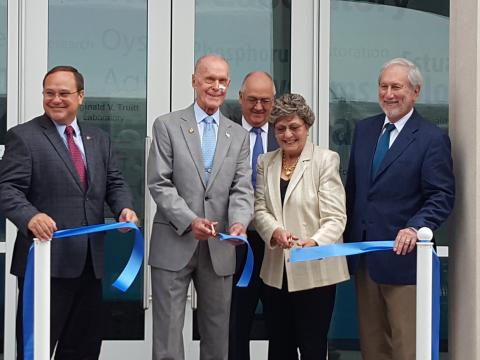
On September 10, the Chesapeake Biological Laboratory in Solomons unveiled a new, state-of-the-art building dedicated to the lab’s founding director, Reginald Truitt.

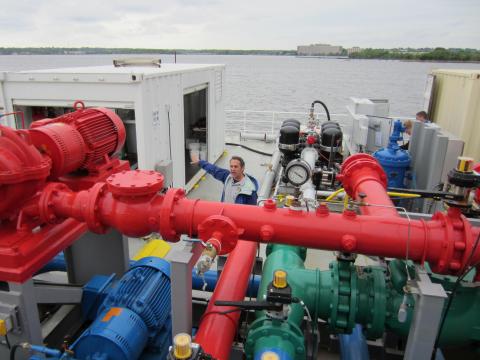
Mobile laboratory helps keep invasive species out of Chesapeake Bay

August 31, 2016
The University of Maryland Center for Environmental Science’s Maritime Environmental Resource Center has a mobile test platform that evaluates the performance of ballast water treatment technologies before they are installed on ships to ensure they meet U.S. Coast Guard requirements.

Study finds human-caused global warming began earlier than expected

August 25, 2016
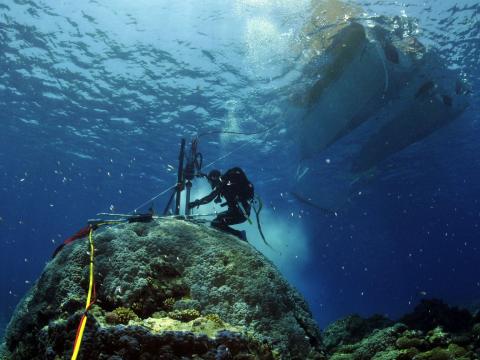
Close to 200 years ago, the Industrial Revolution drove thousands away from working the land to toil in factories in cities, where machine production changed our entire way of life. A new study shows that this major societal shift also triggered simultaneous changes in our climate. An international research project has shown that the increases in temperatures we are witnessing today started about 180 years ago and confirms previous findings that human activity is the cause of modern global warming. 

Legendary Chesapeake Bay scientist Walt Boynton to receive Mathias Medal

August 23, 2016
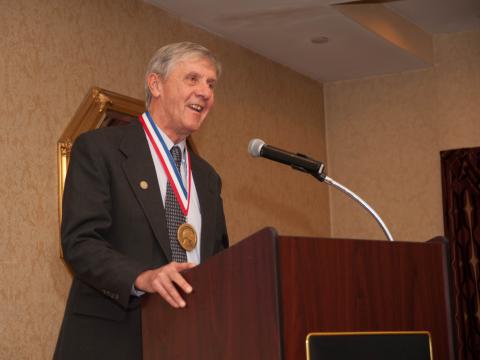
Walter Boynton, longtime professor and estuarine ecologist at the University of Maryland Center for Environmental Science’s Chesapeake Biological Laboratory and a fixture in the world of Chesapeake Bay science for more than 40 years, has been chosen to receive the Mathias Medal to recognize his distinguished career of scholarship and public service.Unknown Object

Open innovation challenge brings new approaches to reduce nutrients in waterways

June 28, 2016
A technology challenge to developing better and cheaper nutrient sensors made the White House's Top 100 list of projects making an impact in American science, technology, and innovation. Mario Tamburri, director of the Alliance for Coastal Technologies at the UMCES' Chesapeake Biological Laboratory, has been a key member of the Challenging Nutrients Coalition, a national inter-agency initiative working to improve our ability to measure and understand nutrient pollution.

Pages