Invasive Species Management in Maryland
MEES Issue Studies Group
Although the “Invasive Species Management in Maryland” course was offered in 2021 through the Marine Estuarine and Environmental Science Program of the University of Maryland Center for Environmental Science, the products and insights developed by the students for this course remain significant for ongoing efforts in managing invasive species and are an excellent example of the types of applied learning offered by UMCES faculty through the MEES program. These resources continue to provide valuable guidance for practitioners, researchers, and policymakers dedicated to protecting Maryland’s ecosystems.
Introduction
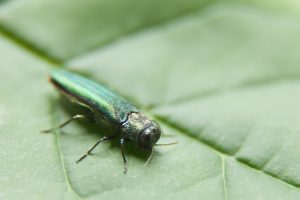
Maryland encompasses a tremendous diversity of natural communities including over 1,250 rare, threatened, and endangered species of plants and animals tracked by the Maryland Natural Heritage Program. Non-native species, however, can have significant and long-lasting negative impacts on rare and declining species and communities, causing an estimated $1.3 trillion in economic damage worldwide over the last 50 years (Diagne et al. 2021, Zenni et al. 2021) and $26 billion per year in damage in North America (Crystal-Ornela et al. 2021). Further, these calculations of economic impact are likely under estimates as they only encompass the subset of invasive species for which impacts have been quantified. This issue study group explored how invasive species ecology and research informs on-the-ground management across Maryland from the mountains to the sea. Towards this goal, we spoke with a range of organizations and managers engaged in invasive species science and management around the state. The students worked with managers to develop case studies of invasive management for specific species and management briefs on an issue related to ecosystem-wide management within Maryland’s natural communities.
Through these efforts, we learned that:
- Early detection is critical.
- Innovative technologies (e.g., eDNA, imaging) are advancing monitoring capabilities.
- Communication with stakeholders is key to control spread.
- Cost of control is low during early establishment, but so is legislative will to act.
- Unintended consequences in management need to be understood through research.
- Restoration needs to be accomplished at the level of the entire community / ecosystem.
We thank managers of the Maryland Department of Natural Resources (opens in a new tab), the U.S. Coast Guard (opens in a new tab), the National Park Service (opens in a new tab), The Nature Conservancy (opens in a new tab), University of Maryland Sea Grant Extension (opens in a new tab), and academics from the University of Pittsburgh (opens in a new tab), University of Florida (opens in a new tab), Cary Institute of Ecosystem Studies (opens in a new tab), and University of Maryland Center for Environmental Science!
Learn more about the case studies and management briefs prepared by the course participants below.
Case Studies
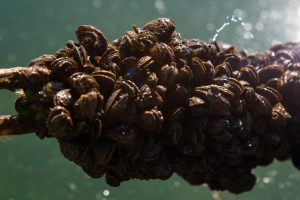
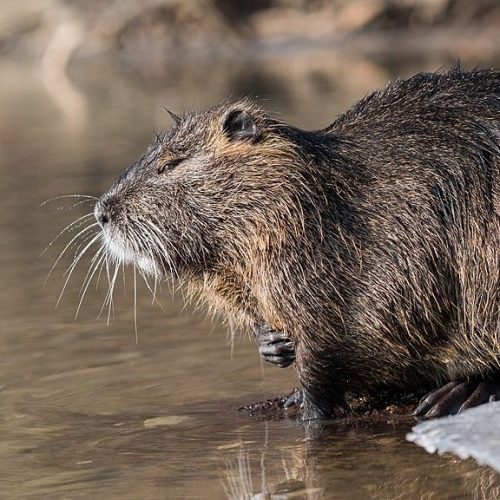
The USDA (opens in a new tab) defines an invasive species as “an alien species whose introduction does or is likely to cause economic or environmental harm or harm to human health” as per Executive Order 13112: Section 1. Definitions. (opens in a new tab) The Mid-Atlantic Invasive Plant Council (opens in a new tab) estimates that over 300 invasive terrestrial and aquatic plant species occur in the region. The Chesapeake Bay itself has more than 200 known invasive aquatic plant and animal species according to Maryland Sea Grant. Of those, the six species of greatest concern are mute swans, nutria, common reed, purple loosestrife, water chestnut, and zebra mussels.
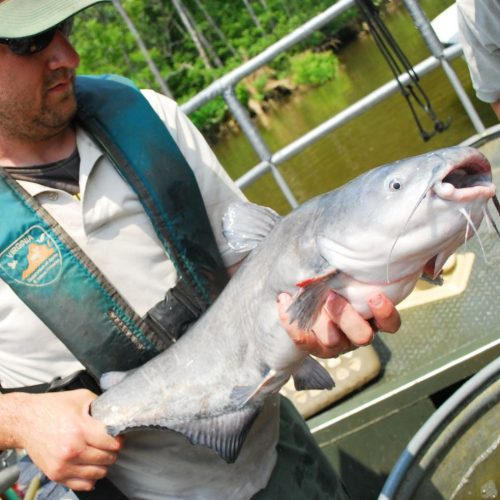
Thirteen species-specific case studies were developed to gain knowledge about some of the more pernicious invasive species in Maryland. These student-compiled invasive species case studies encompass both terrestrial and aquatic habitats, as well as plants, animals, and aquatic diseases:

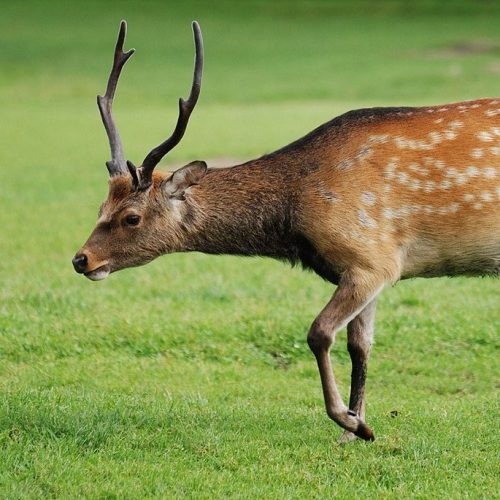

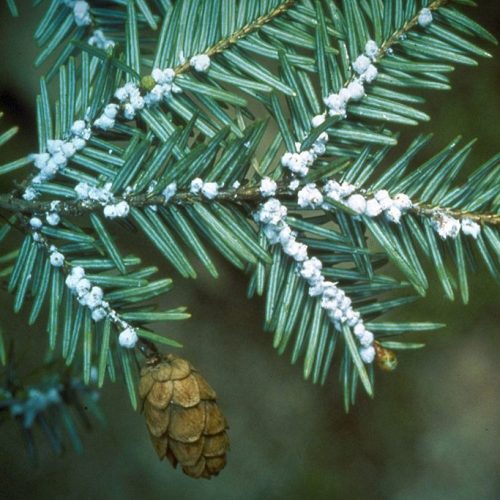



MSX, Haploporidium nelson, Novirhabdovirus
Management Briefs
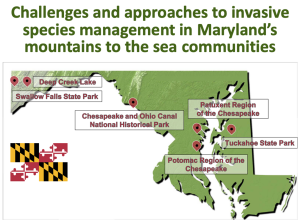 Invasive species do not exist in a vacuum and therefore cannot be managed effectively without understanding their impacts within native communities, otherwise management may trigger unintended and potentially harmful consequences for native species and ecosystem processes. Six projects of invaded ecosystems within Maryland were developed to highlight the importance of holistically managing ecosystems for invasive species and the importance of emerging technologies and outreach with stakeholders. Six student-led management briefs and presentations were developed, targeting 3 aquatic habitats and 3 terrestrial habitats that span from the mountains to the sea in Maryland:

Swallow Falls State Park

Deep Creek Lake

C&O Canal National Park