Ming Li and an international team of scientists will address increasing salt intrusion and its impacts on freshwater resources and water supplies, an increasingly global threat, over the next four years.
Philanthropy enables scientists to answer early key questions and obtain critical proof-of-concept results that can be used to leverage support from traditional funding agencies.
The University System of Maryland (USM) Board of Regents has appointed Dr. Fernando Miralles-Wilhelm the next president of the University of Maryland Center for Environmental Science (UMCES). Miralles-Wilhelm is currently professor and dean of the College of Science at George Mason University. He will be the seventh president in UMCES' nearly 100-year history.
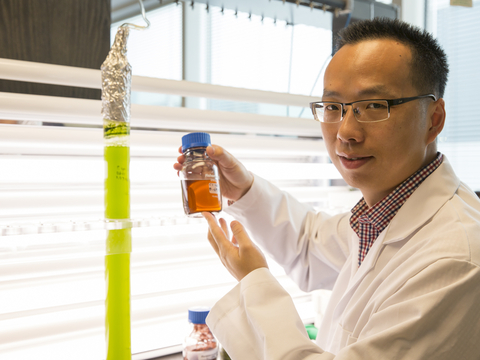
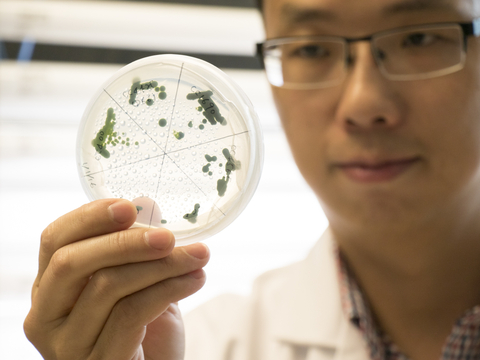
UMCES-IMET scientists have been awarded a three-year, $2 million grant from the U.S. Department of Energy to understand how microalgae can be used to reduce carbon dioxide emissions from power plants.
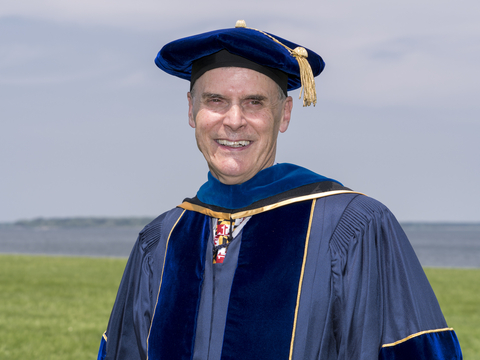
After a 40-year career in science and higher education, UMCES President Peter Goodwin has announced his retirement at the end of this academic year. “It has been the honor of a lifetime to lead UMCES toward its second century of impact in Maryland and around the world.”
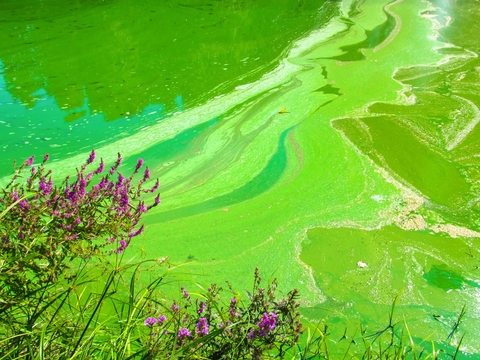
UMCES has been awarded a $7.5 million grant from NOAA to lead an innovative US Harmful Algal Bloom Control Technology Incubator to advance innovative ways to control harmful algal blooms that are impacting the health of people and marine ecosystems, as well as regional economies.
Mike Sieracki has been selected as the new director of UMCES' Horn Point Laboratory, taking the helm from Mike Roman, who is stepping down after 20 years to continue his ocean research as a faculty member.