A new normal? Why two wildfire-related air quality emergencies in three years isn’t all that unusual
As seen again this year, the United States is no stranger to wildfires, at least in the West. But why are areas so far away from the fires experiencing smoke effects?
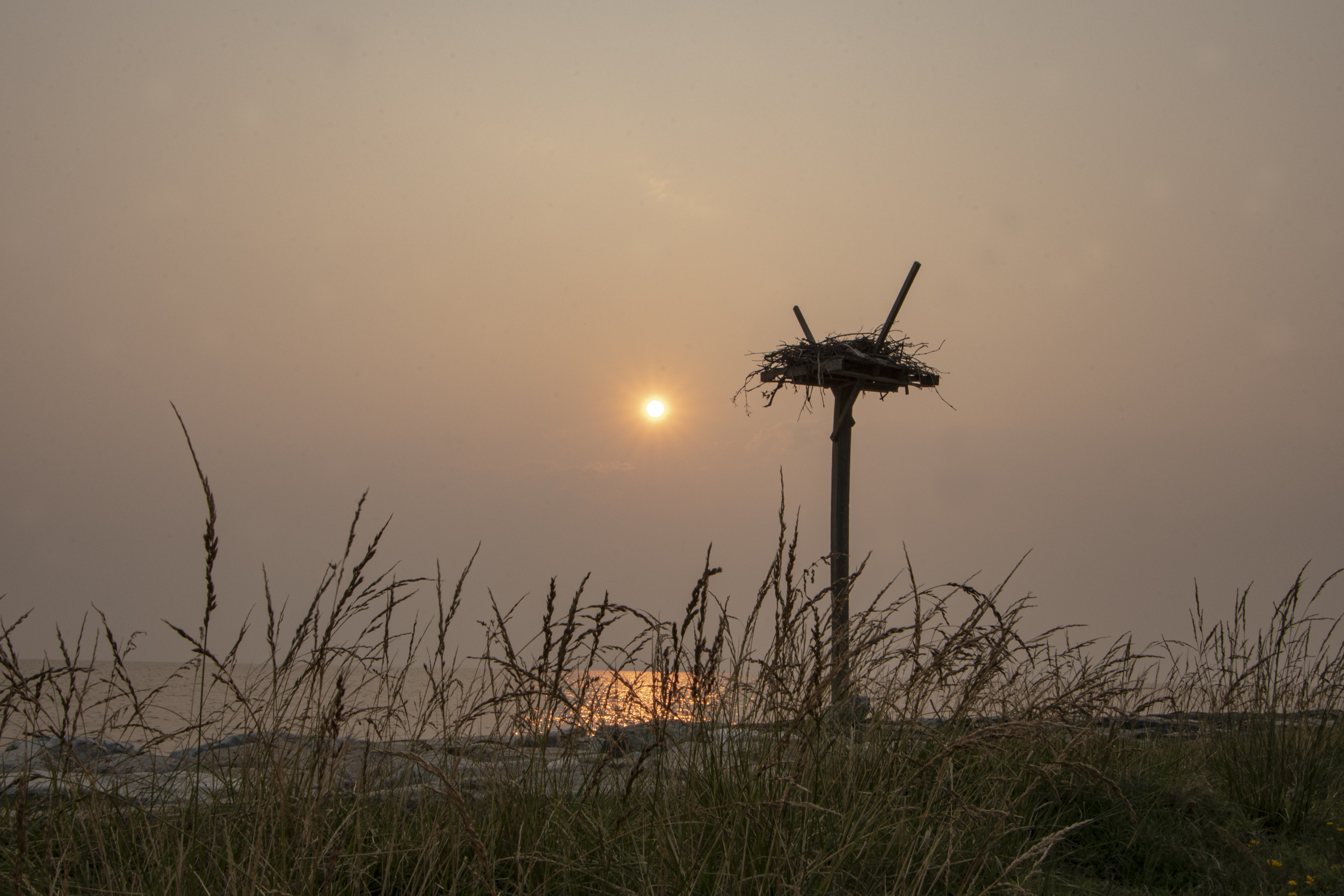
The summer 2026 wildfires in Ontario, Canada forced several states, including Maryland, to issue widespread air quality advisories. Despite the fires being hundreds of miles away, strong winds blew acrid smoke as far south as Washington, DC, creating scenes of muted orange sunlight and foul-smelling air that hurt to breathe.

Photo by David Illig, courtesy of the Maryland Department of Natural Resources
As seen again this year, the United States is no stranger to wildfires, at least in the West. But why are areas so far away from the fires experiencing smoke effects? And why did it happen again, so recently after a similar incident in 2023?
Mark Cochrane (opens in a new tab), a scientist and professor at the UMCES Appalachian Laboratory, is an expert in wildfires and climate change. He’s studying peat fires in Indonesia and wrote about the LA wildfires of 2025 (opens in a new tab). In 2023, smoke from fires as far north as Quebec and Nova Scotia rode the winds all the way to Maryland. Before 2023, this particular region hadn’t seen this kind of phenomenon before. When asked “Why now?” and “What’s different?,” Cochrane made it clear that the difference isn’t in the number of wildfires: it lies in their severity.
“We aren’t having more fires, per se; we are having more very large wildfires that we cannot control,” Cochrane said. The massive scale of these fires is the main contributing factor, producing so much smoke so quickly that the effects can be seen, felt, and smelled thousands of miles away.
Cities in the Midwest, especially in the Great Lakes region, saw some of the worst air quality in the world during the week of July 13. Detroit, MI took the #1 spot on Thursday, July 16, with an AQI (air quality index) of over 700 – more than double the number needed to qualify as “hazardous” – according to Fox Weather (opens in a new tab). Minneapolis and Chicago also cracked the top five.

A map of air quality in the northeast US on July 16, 2026. Image from FOX Weather (opens in a new tab).
Cochrane also shared some important context about this particular round of wildfires and what has given them such a wide footprint of impact. “An extensive drought across much of Ontario and northern Minnesota primed the boreal forests there, and the underlying duff and peat soils, for severe burning if ignition sources became available. While a few fires started earlier, the big explosion of fires occurred July 6-7, when a ‘dry’ thunderstorm system produced hundreds of lightning strikes that started many, many wildfires,” Cochrane said.
The National Weather Service (opens in a new tab) describes dry thunderstorms as “thunderstorms that produce little or no precipitation at the surface.” Dry thunderstorms are especially dangerous during fire seasons; without accompanying rain, the dry land and vegetation below are prime targets for lightning strikes, with nothing to calm the heat.

Timelapse photo of lightning by Johannes Plenio. (opens in a new tab)
Cochrane also cautions that, even once these fires are contained, there remains substantial risk. “The fast-moving flame fronts burning through the trees capture public attention … However, the larger story and amount of smoke being generated is caused by the smoldering combustion of the peat soils behind the flames. This slower, flameless process will likely continue for weeks if not months, producing extreme amounts of smoke at ground level until fall rains and cooler temperatures allow water tables to recover and extinguish the burning peat,” Cochrane continued.
In other words, the soil itself will continue to burn and smolder, largely unreachable by traditional firefighting methods. Only the gradual changing of seasons and the recovery of the water table will fully smother these fires. “These ‘holdover’ fires in the smoldering peat soils have the potential to reignite future wildfires if the conditions stay or return to being hot, dry and windy,” Cochrane said.
Why the increase in extreme, uncontrollable fire events? “There are debates of the cause, but climate change is a prime determinant,” Cochrane stated. “Warmer weather means the snow melts earlier, allowing the land to dry quicker in the spring, which extends the potential fire season. When we have drought conditions that have become more prevalent with climate change, the stage is set for a severe fire season,” he shared. “Add a bunch of lightning-caused ignitions, and we have this year. This doesn’t mean years like this are unprecedented, but the literature states that they are becoming 4-5 times more likely.”

Wildfires in Quebec as seen from above on June 28th, 2023, acquired by a Copernicus Sentinel-2 satellite. (opens in a new tab)
The impacts of climate change are being felt around the globe in numerous ways. Natural Resources Canada (opens in a new tab) cites similar risks associated with warming: “Evapotranspiration is being enhanced and peatland water tables are subsequently lowering, leaving these vast carbon reservoirs more vulnerable to fire. In more northern regions, warmer temperatures are contributing to permafrost melting, which exposes additional peat material to increased risk of consumption during a fire.”
The question becomes, what can be done? As the global climate warms, prevention on a massive scale seems both difficult and unlikely. But there are still mitigation methods that can be deployed locally and regionally to try to minimize the catastrophic effects of these fires.
“Things like fuels treatments (e.g. thinning forests to remove smaller trees that act as ladder fuels) and prescribed fires (to remove understory and forest floor fuels) are the most cited actions that should be undertaken,” Cochrane said. The problems, of course, are cost, feasibility, and effectiveness. These strategies would be helpful in many locations, especially dry, low-elevation forests that are fuel-limited, but the scale of the problem is large enough that implementing these strategies across whole landscapes would be extremely costly in both money and resources.
“What we should do is assiduously treat such forests that are in proximity to human settlements,” Cochrane suggests. “In fire prone regions, landscapes should be treated around houses to create defensible space. Structures can also be better constructed to be survivable in the face of wildfire.” Cochrane cited the FireWise program (opens in a new tab) from the National Fire Protection Association (NFPA), which provides guidance on protective landscaping and home practices in wildfire-prone areas.

A graphic depicting the Home Ignition Zones (HIZ) courtesy of the National Fire Protection Association (opens in a new tab) (NFPA).
Wildfires aren’t going away, and while the Maryland region hasn’t seen much direct fire impact, a warming global climate could change that. Adopting mitigation strategies today can help to prepare for these changes.