Celebrating the Legacy of Lauded Estuarine Ecologist Dr. Walter Boynton
Dr. Boynton passed away on September 14, 2026.
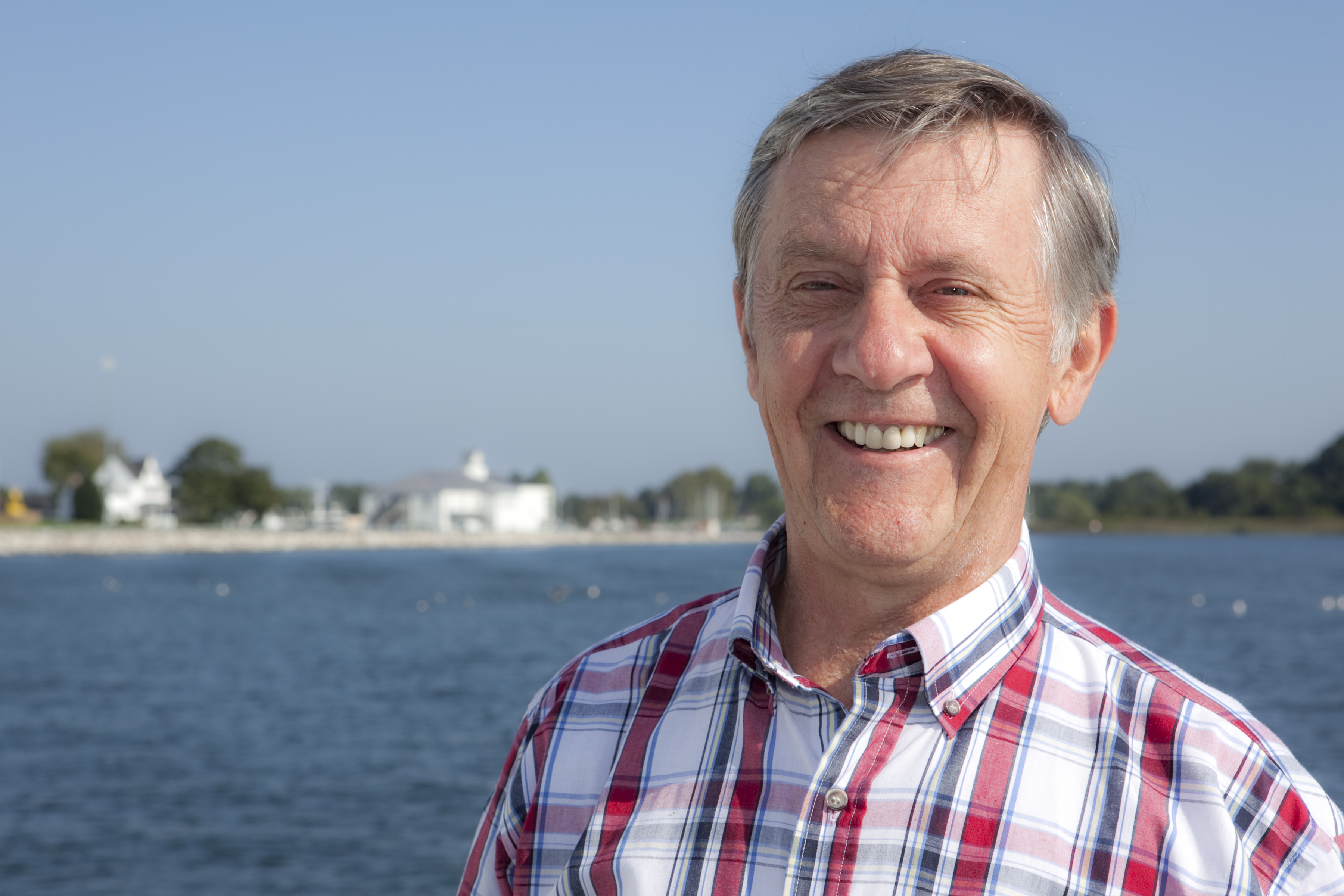
ANNAPOLIS, MD — The University of Maryland Center for Environmental Science (UMCES) mourns the loss of Professor Emeritus Dr. Walter Boynton, a world-renowned estuarine ecologist whose groundbreaking research over five decades fundamentally transformed the scientific understanding and environmental management of the Chesapeake Bay and coastal ecosystems worldwide. Dr. Boynton passed away on September 14, 2026.
“Walter was a dear colleague, friend, and an extraordinary member of the UMCES community,” UMCES President Dr. Fernando Miralles-Wilhelm said. “His deep commitment to understanding and protecting the Chesapeake Bay, his generosity as a colleague and mentor, and his ability to connect rigorous science with the people and places it serves left an enduring mark on all of us. I will remember Walter not only for his remarkable contributions to science, but also for his warmth, wisdom, and humanity. He will be deeply missed.”

Solving the Mystery of Chesapeake Bay’s Decline
Dr. Boynton joined the faculty of UMCES’s Chesapeake Biological Laboratory (CBL) in Solomons, Maryland, in 1975 when the Chesapeake Bay was experiencing severe ecological decline. Underwater grass beds were dying off rapidly, low-oxygen “dead zones” were expanding, and critical fish populations were collapsing. Working alongside his CBL colleagues, Boynton conducted innovative field measurements, laboratory experiments, and ecosystem modeling to pinpoint why.
Boynton and his colleagues proved that excess nutrients — specifically nitrogen and phosphorus from wastewater treatment plants and agricultural runoff — were clouding the water and fueling the growth of tiny organisms called epiphytes, which attach to grasses and block light. Their landmark findings demonstrated that underwater grasses act as the “kidneys of the Bay,” filtering sediment and cycling nutrients, and established that reducing nutrient runoff was essential to saving the ecosystem.
This research led to nutrient-reduction strategies that remain a cornerstone of bay restoration today. His early work on striped bass habitats also directly informed the commercial fishing moratorium that successfully rescued the species from population collapse.
The Chesapeake Bay Program recently profiled Boynton, whose research also helped drive its founding. In the profile, he expressed a positive outlook for the future of the bay:
Looking back on his career, which included considerable research and teaching that goes well beyond Bay grasses, Boynton is optimistic about the Bay’s recovery.
For one, the cause and impact of nutrient runoff to the Bay is well-known and supported by science. “That means we know what we’re doing,” Boynton said.
The other reason is that, in parts of the Bay where there’s been a sharp decline in nutrient runoff, underwater grasses have recovered in just a few years.
“So if we do the right thing, we should see the results pretty quickly,” Boynton said.
The Chesapeake Bay ecosystem is large and complex, with mounting pressures like population growth and forest loss that make it more difficult to keep pollutants out of the water. But thanks to researchers like Boynton, partners are able to move the needle on a variety of issues.
“All of those things give me hope,” Boynton said. (opens in a new tab)

Dr. Boynton accepting the Mathias Medal in 2016.
A Career of Global Impact and Public Service
Over his more than 50-year career at UMCES, Dr. Boynton published more than 100 scientific papers and technical reports on estuarine ecology, water quality, and restoration issues, including the first paper showing that nitrogen plays a key role in the eutrophication of many estuarine ecosystems.
In recognition of his distinguished contributions to environmental science and stewardship, Dr. Boynton received numerous prestigious honors, including:
- Ruth Patrick Award (2017): Awarded by the Association for the Sciences of Limnology and Oceanography (ASLO) for his research to solve environmental problems and shape policy with long-lasting impacts on estuarine ecosystems.
- The Mathias Medal (2016): Awarded jointly by Maryland Sea Grant, Virginia Sea Grant, and the Chesapeake Research Consortium to recognize his distinguished career of scholarship and public service supporting the Chesapeake Bay.
- Admiral of the Chesapeake (2015): Awarded by Maryland Governor Dr. Martin O’Malley in recognition of his extraordinary commitment to conserving and restoring the Chesapeake Bay, the surrounding landscape, and the life that inhabits them.
- The Odum Award for Lifetime Achievement (2009): Awarded jointly with Dr. Michael Kemp by the Coastal and Estuarine Research Federation (CERF) for their outstanding, prolonged contributions to estuarine science.
Beyond his scientific publications, Dr. Boynton was deeply committed to translating science into actionable policy, regularly advising state and federal agencies, including the Maryland Department of Natural Resources, the Environmental Protection Agency, and the Chesapeake Bay Program.
Dedicated Educator and Mentor
At the Chesapeake Biological Laboratory, Dr. Boynton was celebrated not only as a brilliant scientist, but as a devoted mentor, teacher, and colleague. Over his long career, he mentored dozens of graduate students, postdoctoral researchers, and summer interns, fostering a welcoming and collaborative culture at CBL.
An interview with Walter about his life and career, filmed in October 2025.
“Walter Boynton was an icon of Chesapeake Bay science whose research and leadership profoundly shaped our understanding of the Bay,” Beth Polidoro, Director of Chesapeake Biological Laboratory, said. “He was also a generous mentor, thoughtful colleague, and dear friend. His scientific legacy will endure for generations, as will the many people he inspired and supported throughout his remarkable career. His wisdom, kindness, and enduring commitment to the people and environment of the Chesapeake will continue to shape the CBL community for years to come.”
Born and raised in Massachusetts, Boynton developed an early love for the outdoors through camping, canoeing, and ice fishing. He first visited the Chesapeake Biological Laboratory as a college student taking a summer job. What began as a temporary stay turned into a lifelong home and career in Solomons, Maryland.