Ecolabeling can benefit shellfish aquaculture
Faculty members Matt Gray and Louis Plough and students share the potential benefits of applying Ecolabels to shellfish aquaculture. They argue more research is needed to understand how different modes of oyster aquaculture impact ecosystem services.
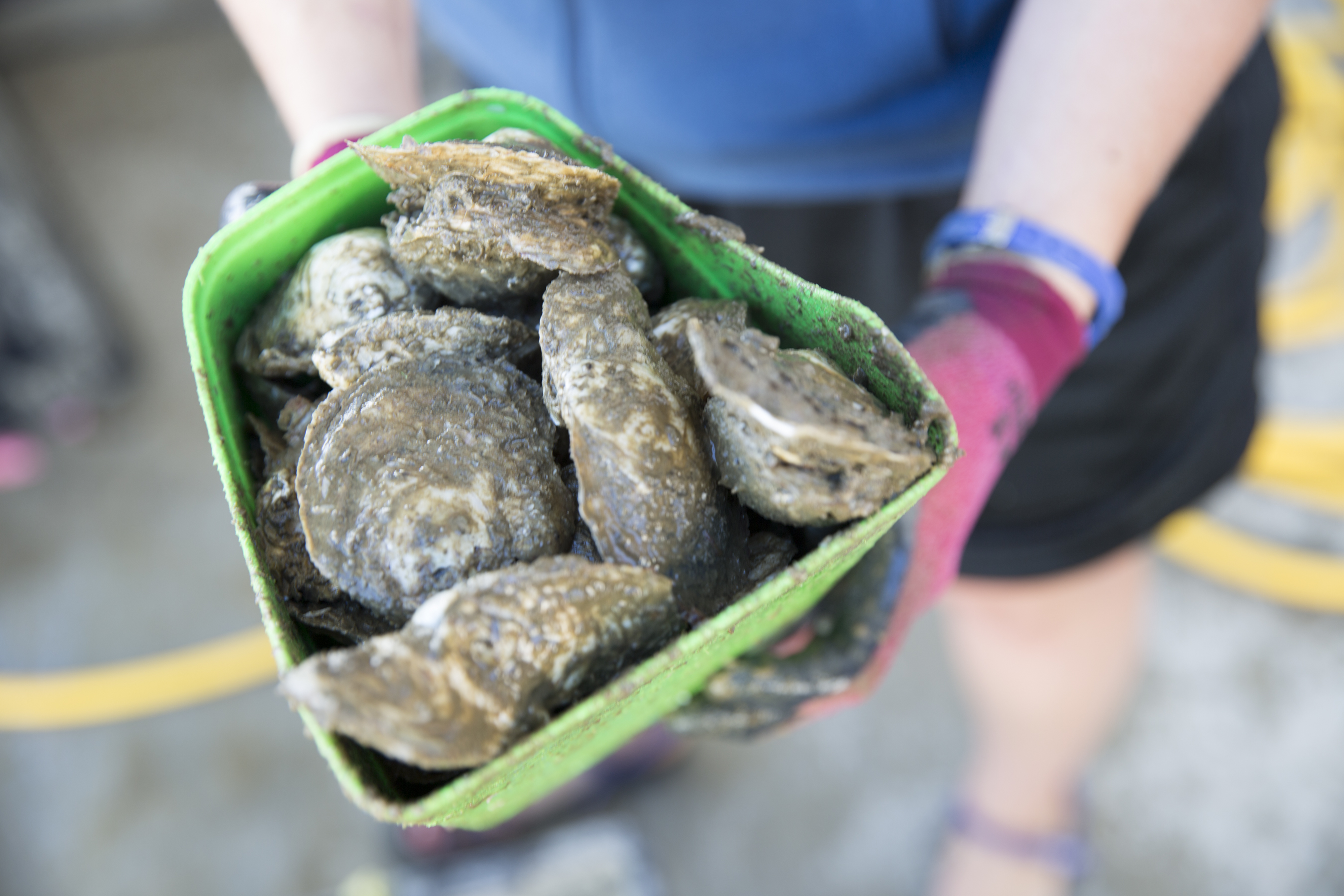

Ecolabels are increasingly being used to notify consumers that the labeled product imposes minimal harm to the environment or other natural resources. A recent publication explains how shellfish aquaculture is uniquely positioned to benefit from ecolabeling by improving public perception and encouraging consumers to enjoy a highly sustainable source of animal protein. This paper was the final project for students in a first time class, “Aquaculture and the Environment” taught by UMCES Horn Point Laboratory faculty Matt Gray and Louis Plough. An important added benefit of oyster aquaculture is the numerous ecosystem services shellfish provide to improve environmental quality. These services include: nutrient cycling, shoreline stabilization, habitat provision and biofiltration.
While ecolabels seem a win-win, Gray and team argue more research is needed to better understand how ecosystem services vary among different production modes of oyster aquaculture to ensure products are correctly labeled and inspire consumer confidence. There are currently four production modes: on-bottom, rack and bags, suspended lines and floating. Only the “on-bottom” mode provides all of the ecosystem services but each mode provides some ecosystem services, and different modes may better serve the oyster farmer.