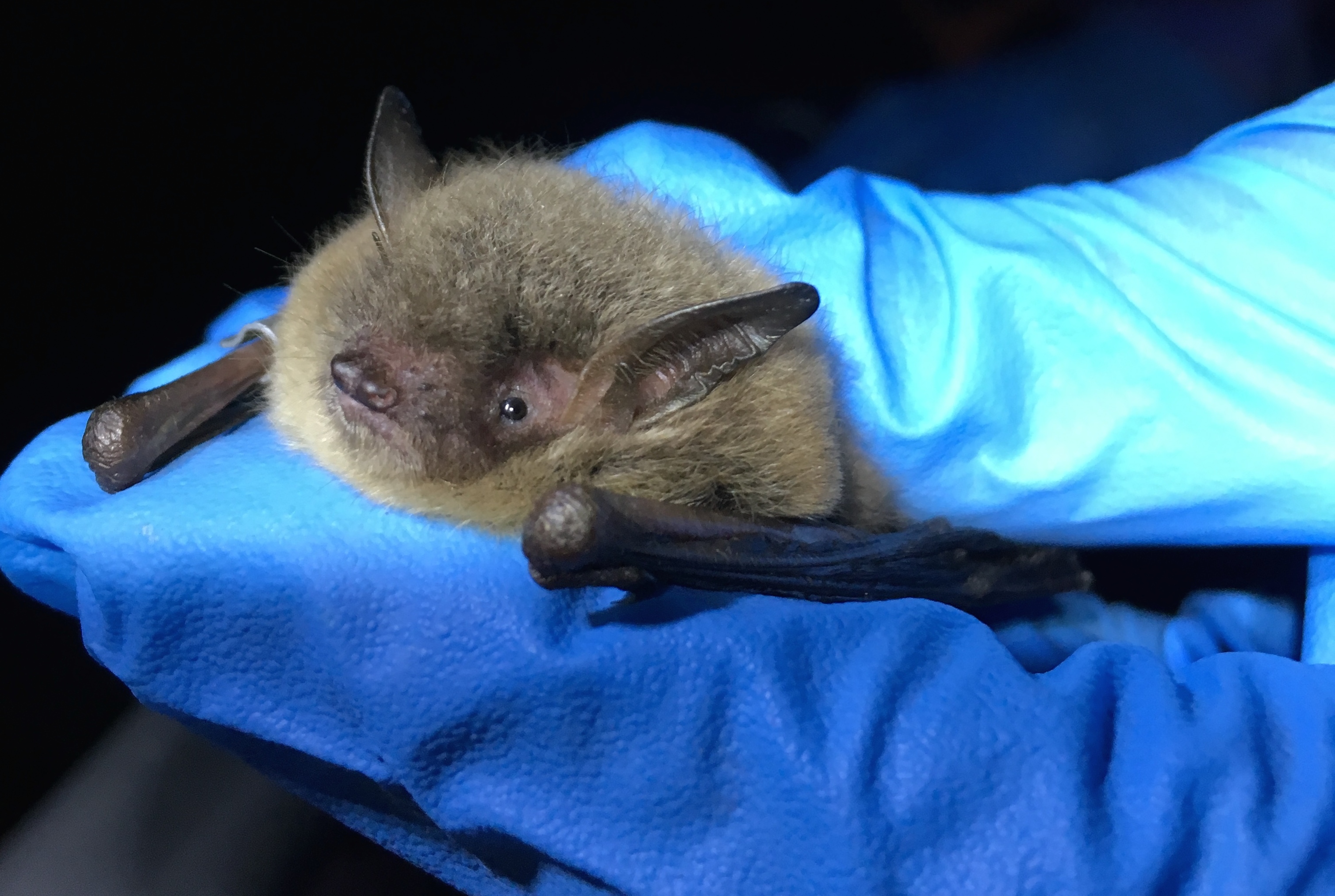
Although bats provide a number of beneficial services- from eating insects, to pollinating plants and spreading seeds, to providing the inspiration for advances in sonar and airplane navigation- many of us still view them as the dirty carriers of disease or the mythical symbols of darkness and danger. I first fell in love with bats during a tropical ecology course in Costa Rica. I had never seen a bat up close before, and they are amazing! Since then, I’ve worked with bats throughout the eastern United States and in Oregon, Costa Rica, Panama, Brazil, and Canada.
Bats are incredibly diverse and truly fascinating critters. By sharing my research through this project page, I hope to share what makes these little flying furballs so wonderful. Some are adorable, others are bizarre, all are vitally important.
Presentations
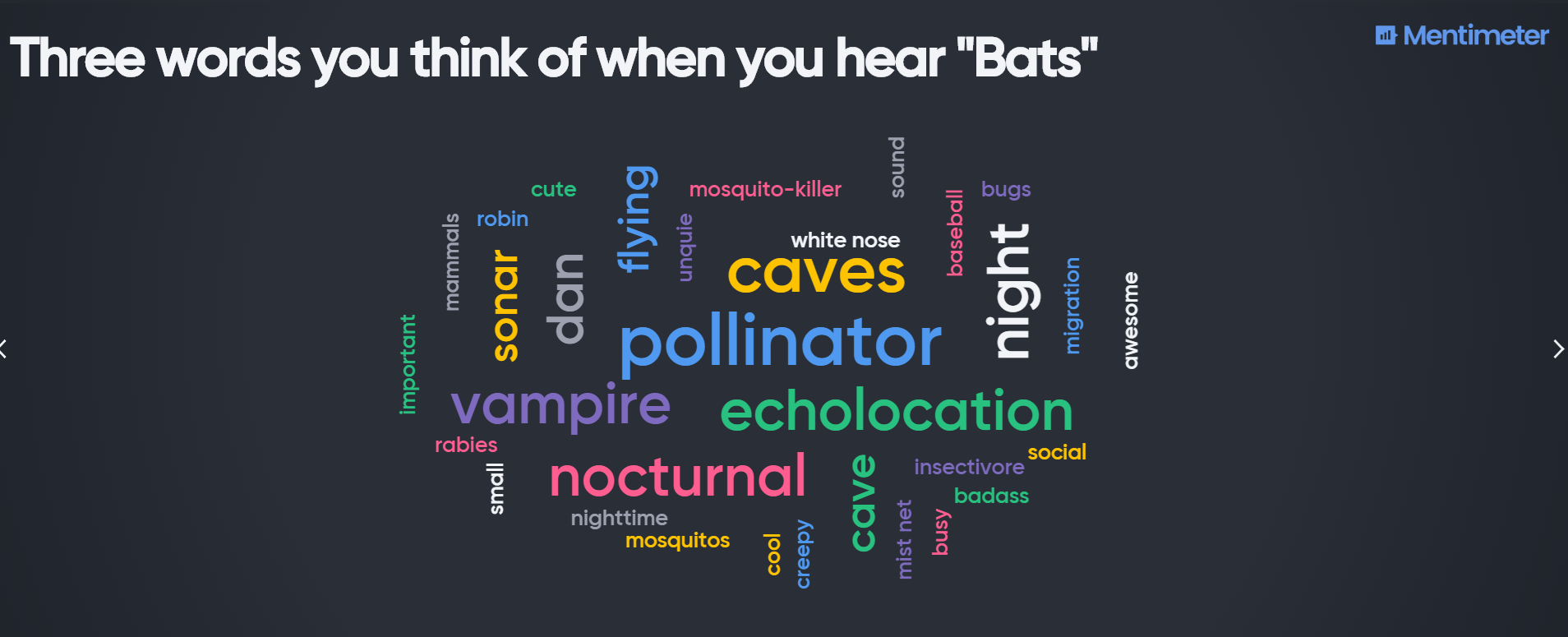
Word cloud generated by participants before bat presentation on October 24, 2019.
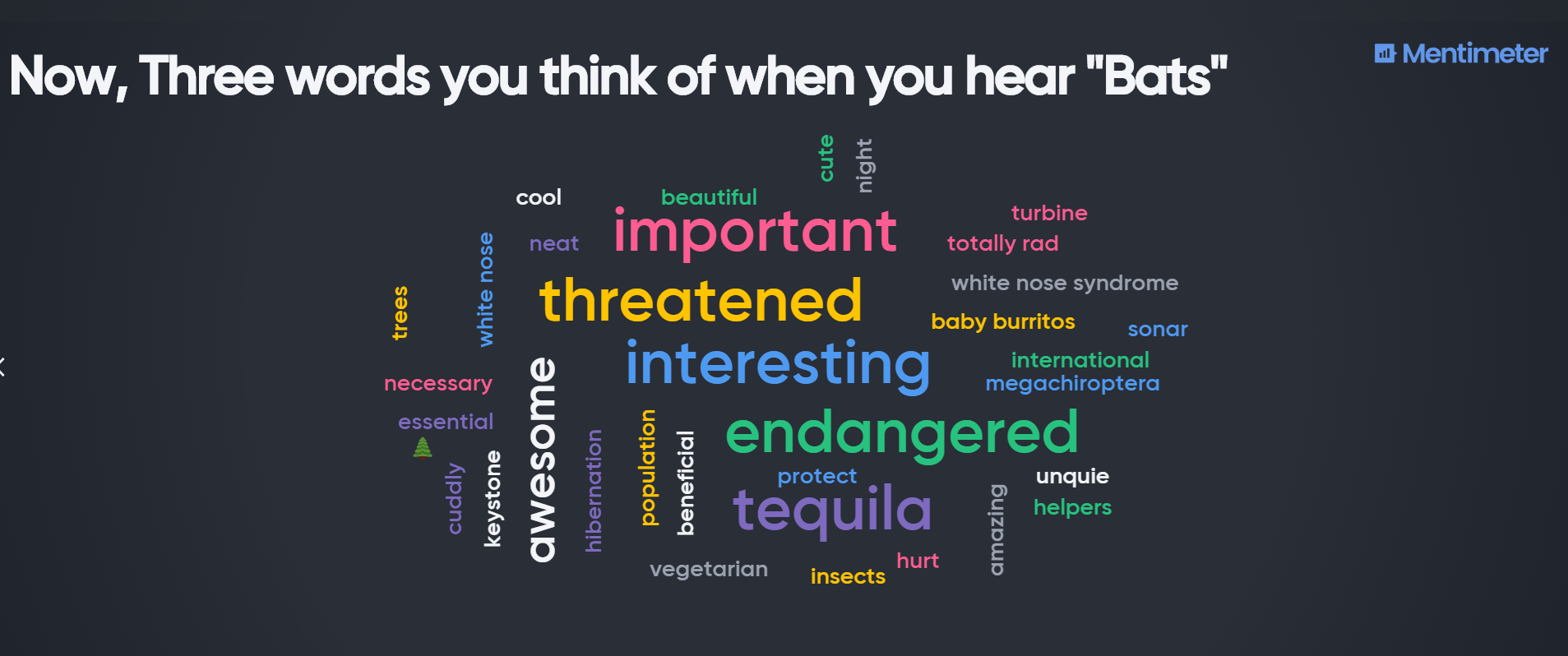
Word cloud created by responses after bat presentation on October 24,2019.
To learn more about bat research in Maryland and beyond, please click on the link below to view a recording of a recent talk I gave with my colleague Dan Feller, Wildlife Ecologist with the Maryland Department of Natural Resources, as part of the Appalachian Laboratory’s Watershed Moments Community Learning series.
I’ve served on the Appalachian Laboratory bat research team since 2010 and am currently pursuing a Ph.D. at the Appalachian Laboratory through the Marine-Estuarine Environmental Sciences Graduate Program of the University System of Maryland.
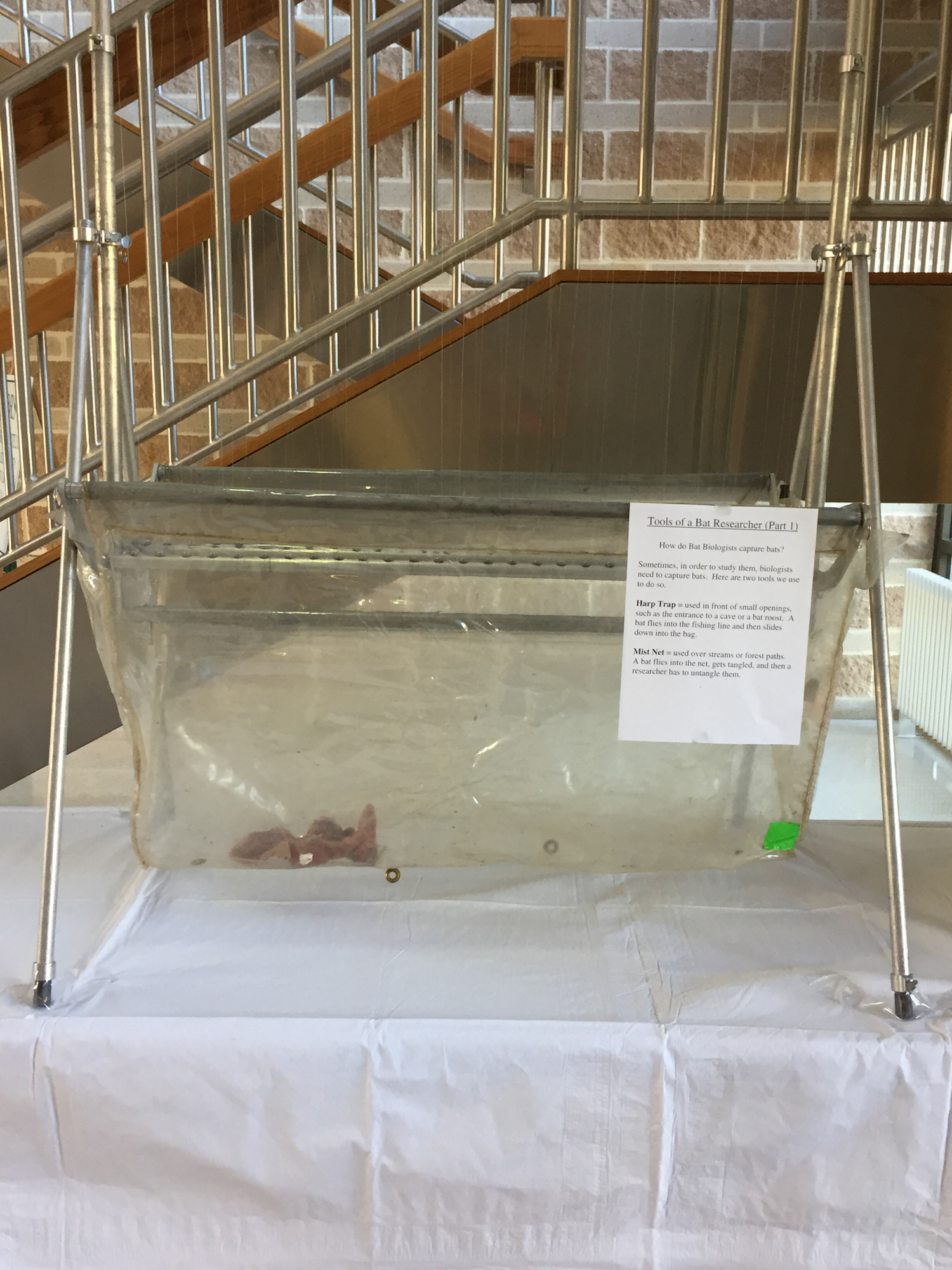
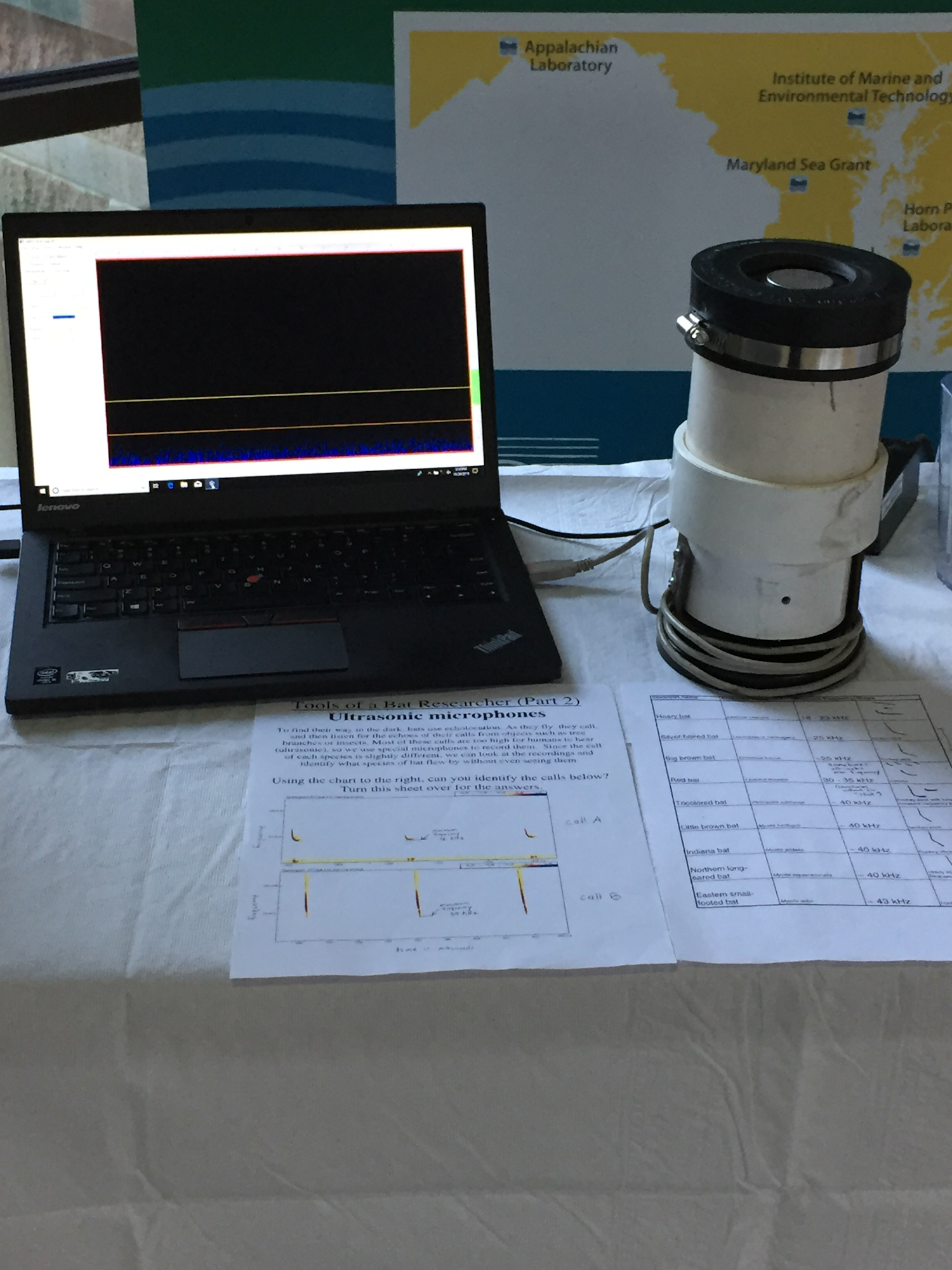
The following photo gallery provides more details on the tools we use to conduct bat research:
Mist Net- Used over streams or forest paths. A bat flies into the net, gets tangled, and then a researcher has to untangle them.
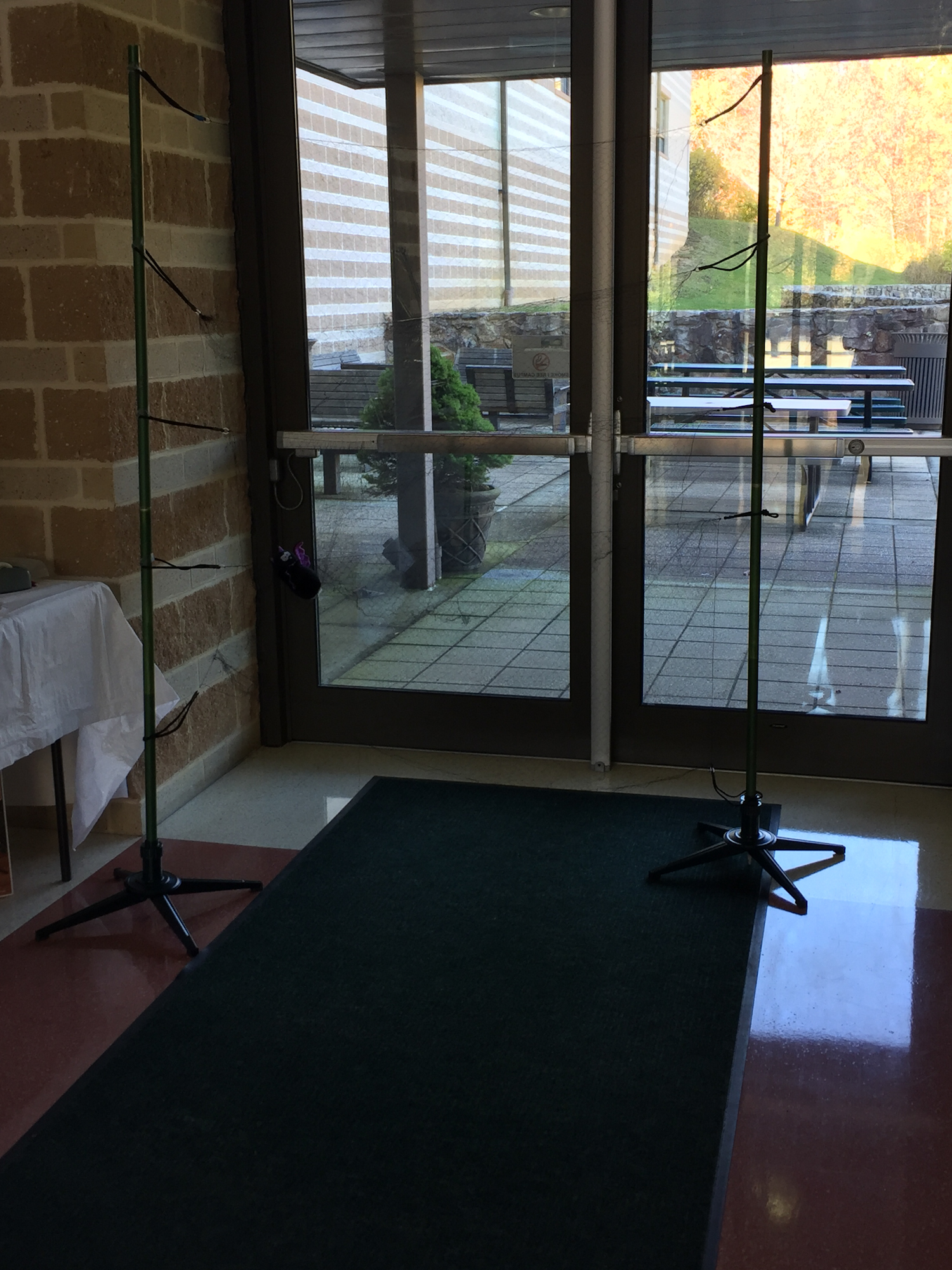
Harp Trap- Used in front of small openings, such as the entrance to a cave or bat roost. A bat flies into the fishing line and then slides down into the bag.
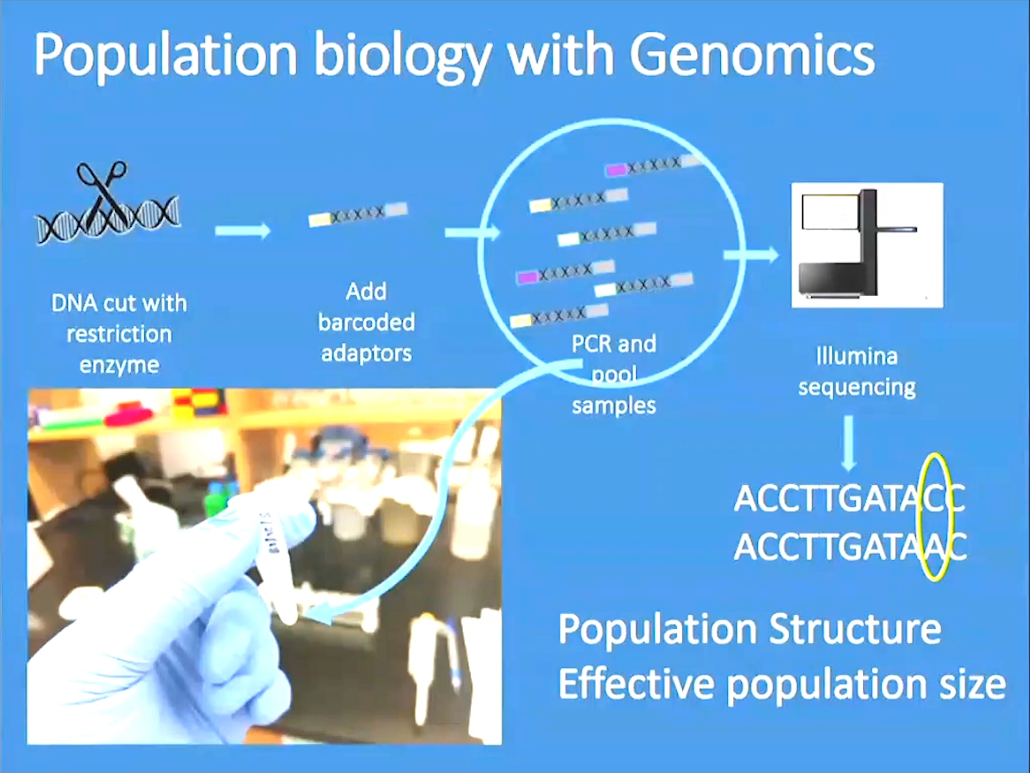
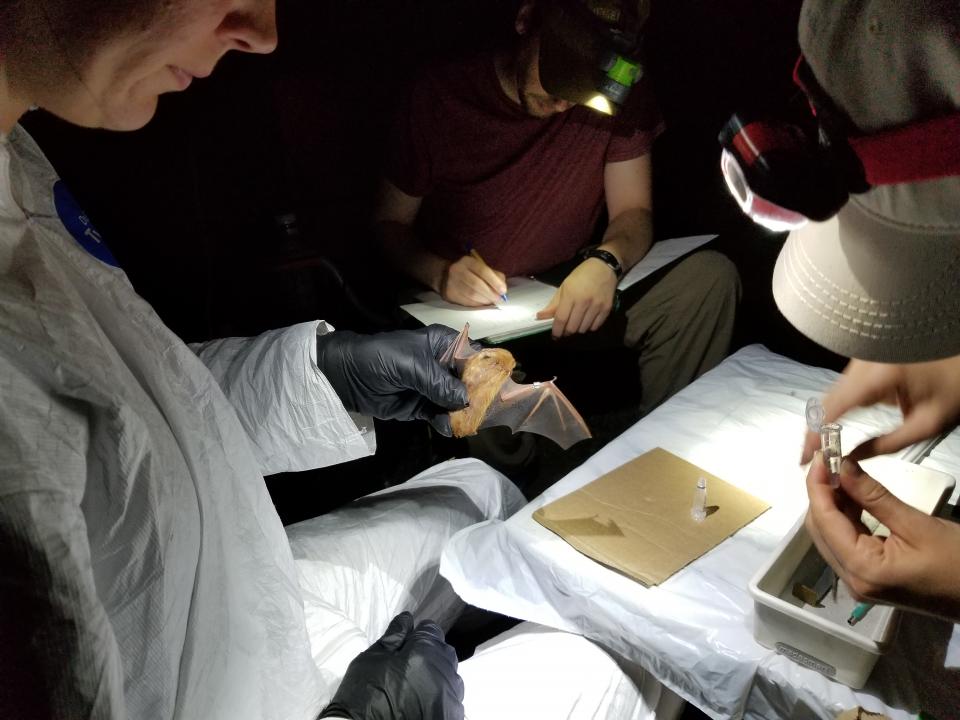
Studies related to bat population size also now make use of genomics, an area of genetics concerned with sequencing and analyzing an organism's complete set of DNA or its genome.
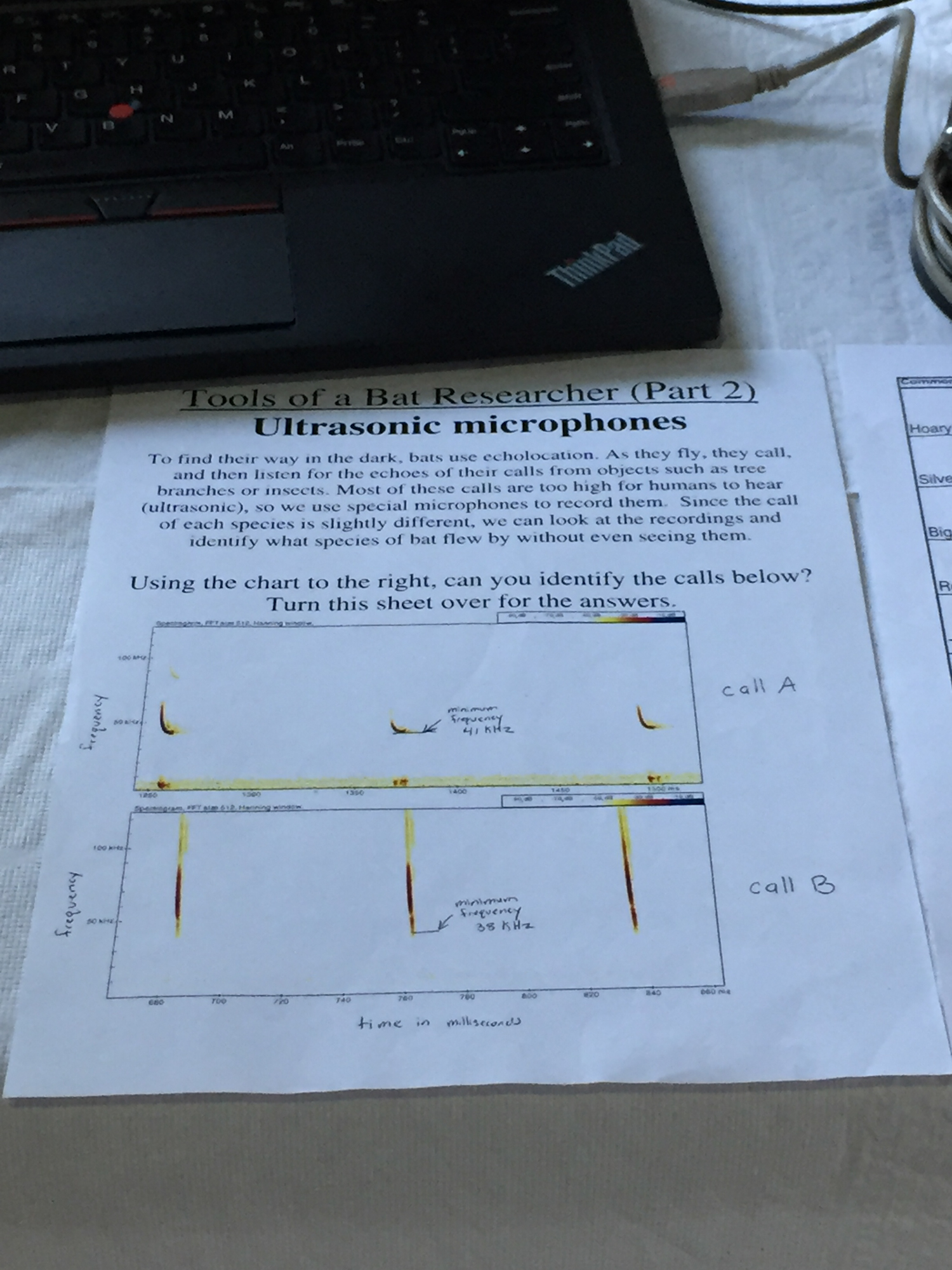
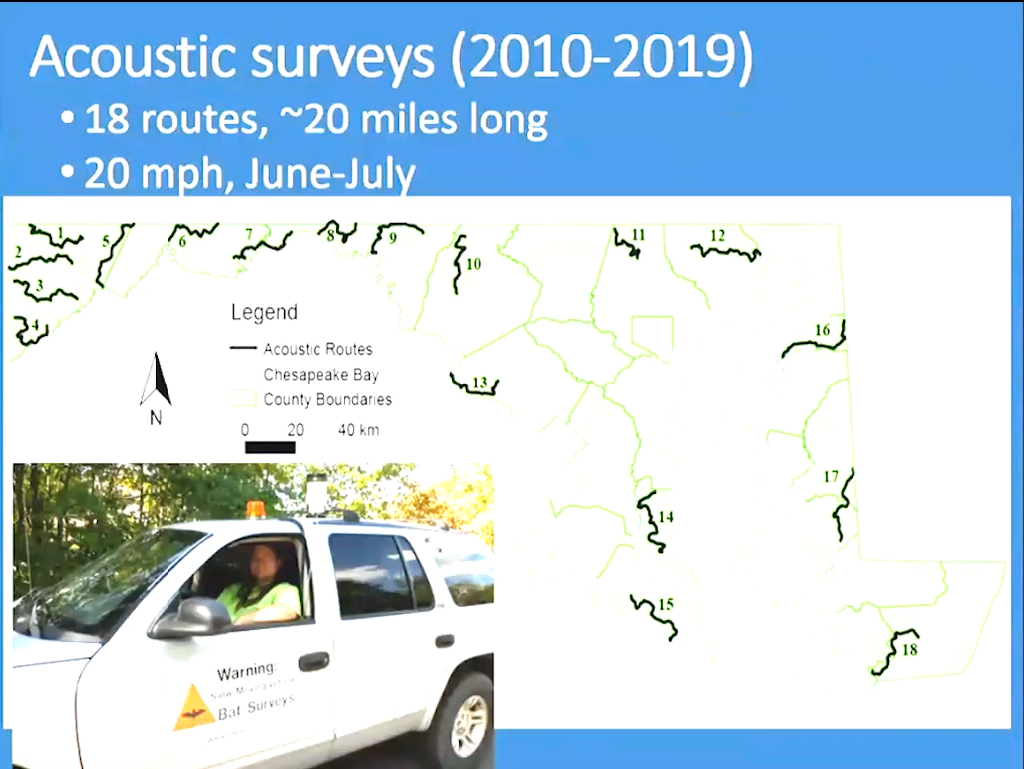
To find their way in the dark, bats use echolocation. As they fly, they call, and then listen for the echoes of their calls from objects such as tree branches or insects. We use special microphones to record these calls.
Since the call of each bat species is slightly different, we can look at the recordings and identify what species of bat flew by without even seeing them.
Juliet Nagel conducts acoustic surveys throughout Maryland each year. This image depicts the routes and other details of those surveys.