Highest Score Ever Achieved for UMCES’s Chesapeake Bay and Watershed Report Card
Positive actions raise the grade for the Chesapeake Bay leading to benefits for the environment and local communities
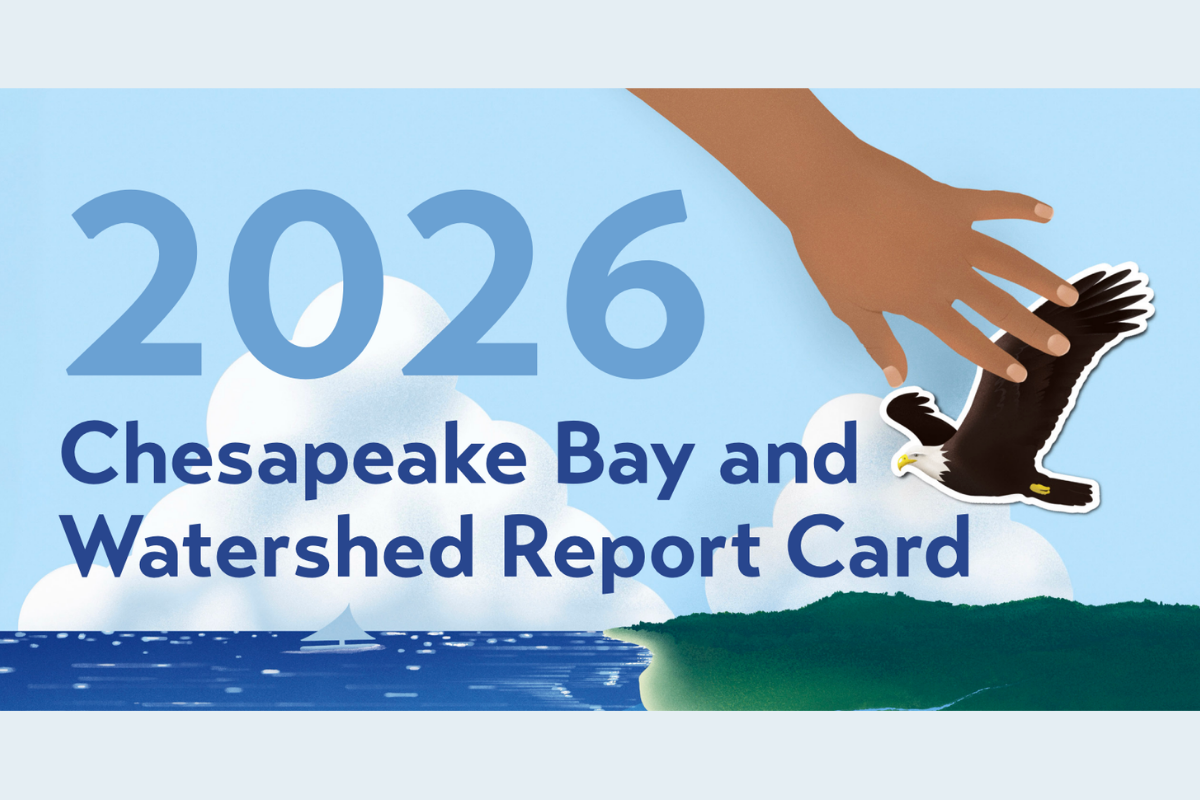
WOODBRIDGE, VA (OCTOBER 13, 2026) — The University of Maryland Center for Environmental Science (UMCES) (opens in a new tab) released its 20th annual Chesapeake Bay and Watershed Report Card (opens in a new tab), a comprehensive assessment of the Chesapeake Bay and its Watershed. The overall Chesapeake Bay earned a grade of C+, the highest score the Bay has achieved in 40 years of tracking. The Chesapeake Bay Watershed, which includes ecology, society, and economy indicators, also scored C+.
UMCES’s flagship Chesapeake Bay and Watershed Report Card, developed in collaboration with local stakeholders, is a proven tool for measuring the latest available data and communicating social, environmental, and economic health to inspire action. The 20th report card summarizes data collected across the watershed through December 2025. In addition to the higher score since UMCES’s last report, long‑term trends continue to improve for most regions and indicators. Improving indicators in Bay waters lead to better habitat for fish, crabs, and other animals, and support recreation, tourism, and local economies. These improvements are the result of a strong partnership between scientists, federal and state governments, nonprofit organizations, local communities, and industry working to secure and direct critical investments in restoration action across the watershed.
“Real recovery isn’t measured in single years — it’s built over decades. The Chesapeake Bay and Watershed’s highest score in 20 years reflects a steady, long-term trajectory, proving what sustained science-guided efforts can achieve. This milestone isn’t the finish line or a reason to pause; it’s momentum. UMCES will keep delivering the science that decision-makers need to safeguard the Bay and support the communities and economies that rely on it,” said Dr. Fernando Miralles-Wilhelm, President of UMCES.
Of the fifteen Bay regions, eight had improving health trends: Rappahannock, James, Elizabeth, Patapsco & Back Rivers, the Upper Western Shore, Lower Eastern Shore, Upper Bay, and Lower Bay. The Lower Bay achieved the best score on record for a region, a B+. The Lower Western Shore scored the lowest, a D-.
For the first time, watershed-wide trends in water quality scores were included. Overall, watershed water quality is improving over time. Regionally, water quality trends were either improving or not changing for all but two regions, the Lower Eastern Shore and Lower James, where water quality is declining. The water quality index accounts for nitrogen, phosphorus, turbidity, and conductivity.
“The improving water quality over the Chesapeake Bay Watershed is really encouraging. The scores for the tidal portion of the Chesapeake Bay also continue to improve. Taken together, this is strong evidence that restoration efforts are working. We have a long way to go, but we are headed in the right direction,“ said Dr. Heath Kelsey, Director of UMCES Integration and Application Network.
A healthier and more resistant bay means that the system is able to recover from stressors and support the livelihoods of those who depend on it. While the Bay will face new challenges every year, its long-term improvement and the success of science-based efforts to protect, restore, and clean up the bay are reflected in the improving grades. As conditions change, UMCES will continue tracking the status of the Chesapeake Bay and Watershed to enable positive action.
The Chesapeake Bay and Watershed Report Card provides essential data and trends analysis to assess progress towards the revised goals of the 2025 Chesapeake Bay Watershed Agreement. The report card informs leaders and policymakers as they chart progress towards a healthier and more resilient Chesapeake Bay.
You can watch the release event livestream here (opens in a new tab).
Access to b-roll, photos, and visuals is here (opens in a new tab). Link to quote sheet here (opens in a new tab). Report card website is here (opens in a new tab).
###
About UMCES’s Chesapeake Bay and Watershed Report Card
The University of Maryland Center for Environmental Science’s Integration and Application Network produces the annual report card, which is a comprehensive assessment of the Chesapeake Bay and its watershed. The report card uses extensive data and analysis in partnership with the National Fish and Wildlife Foundation (NFWF), the Chesapeake Bay Program, academic institutions, and watershed jurisdictions. For more information about the 2026 Chesapeake Bay and Watershed Report Card including region-specific data, visit chesapeakebayreportcard.org (opens in a new tab).
About the University of Maryland Center for Environmental Science
The University of Maryland Center for Environmental Science leads the way toward better management of Maryland’s natural resources and the protection and restoration of the Chesapeake Bay. From a network of laboratories located across the state, UMCES scientists provide sound evidence and advice to help state and national leaders manage the environment, and prepare future scientists to meet the global challenges of the 21st century.