

Frontiers in Aquaculture
2024
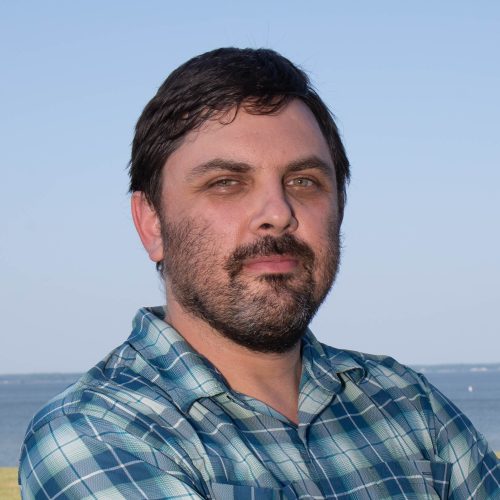
Jacob Cram
Assistant Professor
Location
Horn Point Laboratory
Areas of Expertise
microbial ecology, biogeochemistry, biological oceanography, mechanistic and statistical modelling.
Bio
I am a microbial ecologist whose research focuses on entire microbial communities. I am interested both in which organisms are present and in how those those organisms affect and in turn are shaped by their environment. My group observes micro-organisms in their native environments through molecular biology techniques and microscopy. We also use statistical and mechanistic models to integrate data and better understand microorganisms in their environments, as well as perform experiments to see how entire communities respond to perturbations.
Marine snow — sinking particles comprised of aggregates of dead phytoplankton, fecal pellets of zooplankton and other organic and inorganic materials, provide habitats and nutrients for diverse marine microbial communities. Members of these communities in turn degrade the particles, thereby shaping and determining the flux of organic carbon and nutrients into the deep ocean. This two-way interaction, in which structurally and chemically diverse marine snow particles both shape and are shaped by phylogenetically and physiologically diverse microbial communities, is critical to understanding biogeochemical and local phenomena from regional to global scales. My previous studies include developing a model to predict the role of carbon flux via marine snow in the sequestration of carbon in the deep ocean, a process which modulates the concentration of carbon dioxide in the atmosphere and thus global climate. My research group integrates observational, experimental, and modeling approaches to understand how microbial communities interact with and shape the transport of particulate organic matter in the ocean.
In addition to marine snow I am excited about learning about microorganisms in all sorts of environments. I have studied free living marine bacteria, and human microbiomes. The role of the microbiome in the health and resilience of animals from fruit flies to humans and beyond is a matter of ongoing interest in science. As oyster communities face ongoing challenges from human harvesting, pollution, and climate change, characterizing the microbial communities live symbiotically and sometimes pathogenetically with oysters inform efforts in oyster recovery. Currently, I and others at Horn Point Laboratory are working to understand the bacteria and archaea that live in and on larval oysters.
Education
- University of Southern California, PhD 2014
- Grinnell College, BA 2006
Regularly Offered Courses
- Marine Microbial Ecology (MEES 684)
- Multivariate Analysis in Environmental Science (MEES 609D)
Contact Information
Office Location:
AREL, Room 237
Mailing Address:
Cambridge, MD 21613
Recent Publications
Environmental Microbiology
2024
ISME Communications
2023
Frontiers in Marine Science
2023
Earth and Space Science Open Archive ESSOAr
2021
Global Biogeochemical Cycles
2018
The ISME Journal
2015
The ISME Journal
2015