IMET Undergraduate Summer Internship
 Marine and environmental sciences are crucial for the future of human health, food, water and energy. The nine-week internship connects you to a hands-on research project. Interns will receive an orientation to working in a lab, seminars on molecular techniques relevant to fisheries, aquaculture, energy production and environmental research. Group activities will promote science communication, professional and life skill development. IMET’s work includes the use of aquaculture and genomics to foster conservation and creation of marine resources, including marine bioenergy; environmental sensor development; environmental remediation; developmental biology; marine biomedicine; molecular and cellular systems and sustainable urban ports and ecosystems. Interns will receive an orientation to working in labs focused on molecular techniques relevant to fisheries, aquaculture, energy production and environmental research.
IMET at UMCES is committed to creating opportunities for a diverse body of undergraduates to enable and encourage students from underserved communities to continue on to higher degrees and careers in marine and environmental science.
For 25 years, the IMET Summer Internship Program has encouraged students from underserved communities with an interest in marine and environmental sciences to apply. Over this time, IMET has mentored a diverse cohort of undergraduate interns, building a community of more than 200 alumni—many of whom have gone on to earn M.S. and Ph.D. degrees. Interns will receive an orientation to working in labs focused on molecular techniques relevant to fisheries, aquaculture, energy production and environmental research.
Internship Benefits: This full-time internship includes an hourly wage of $16/hr for the nine-week period. IMET intends to provide no cost summer housing for students from outside the Baltimore metropolitan area. MTA passes will be provided for local travel in Baltimore.
Internship Eligibility: This internship is most applicable to undergraduate students studying biology, marine science, environmental science and other related degrees. (Preference will be given to rising juniors and seniors.)
Students from educational backgrounds with limited access to research opportunities and students from underserved communities with an interest in marine science and environmental science are welcomed and encouraged to apply. A resume, university transcripts and a personal statement of interest are required.
-
- Abdul Adaranijo: Microbial and molecular screening for microorganisms in the Baltimore Harbor.
- Jennifer Akanoh: Developing a RT-qPCR Assay for identifying Toti-like virus in blue crabs.
- Nicholas Camacho: Microbial colonization of microplastics.
- Daquan Davis: The occurrence of antimicrobial resistance in the Inner Harbor and Aquaculture Research Center.
- Aaron Johnson: Optimizing recirculating aquaculture: Microbiological management of solid waste using anaerobic digestion.
- Heather Levine: Barley straw and brewer’s spent grain as a remediation strategy for toxic cyanobacteria.
- Nylah McClain: Genetic typing of gender in reproductively sterile sablefish.
- Aiman Raza: Dreissena mussels as indicator species for assessing aquatic biodiversity in Lake Michigan.
- Kane Samuel: Comparison of identification methods for potential aquatic bacterial pathogens by MALDI TOF analysis and 16S rRNA gene sequencing.
- Amaya Simpson: Myomaker and Myomixer proteins are required for muscle fusion in zebrafish
- Adjele (Ruth) Wilson: Isolation of Mandibular-Organ Inhibiting Hormone cDNA Sequence from the Dungeness Crab, Cancer magister.
-
- Arushi Dalal and Mariela Cisco: An Application to Marine Urban Environments: Novosphingobium, Rhodobacter, and Polynucleobacter are Water Quality Indicators in the Baltimore Harbor
- Sharon Restrepo and Faiza Hasan: Bloom and Bust: How Oxygen Producing Phytoplankton Lead to Anoxia in the Baltimore Harbor
- Sarron Seyoum and Anne-Cecile Choutedjem: Biodiversity of the Baltimore Harbor: Life of the uncelebrated
- Taylor Ibrahim and Sindy Mejia: Using Artificial Substrates to Monitor Biodiversity in the Baltimore Harbor 2016-2017
- Jewel Grant and Adam Lees: Biodiversity in the Baltimore Harbor – How it Impacts Blue Crab Health and Diet
-
- Ricky Agyekum and Erin Hamner: Deteriorating water quality in the Baltimore Harbor: a view from 2019-2020
- Bianca Santos and Brianna Gomerez: What’s for dinner? How biodiversity in Baltimore’s Inner Harbor sustains blue crab diets
- Myia Robinson and Eric Sibanda: Emersion of blue crab leads to changes in the expression of stress pathway genes
- Venus Huang and Lizi Cudal: Comparing microbial communities between Baltimore Harbor and open oceans
- Jenny Lenhoff and Gelila Begashaw: Harnessing the power of bacteria and archaea to solve environmental issues
-
- Andrea White: Identifying Crustins in Blue Crabs
- Libby Gilmore: The Effect of Aragonite Amendments on Microbial Community Diversity
- Jacqueline Rogers: Dead-end Knockout and Primordial Germ Cell Development| Mentor: Dr. Ten-tsao Wong
- Emma Yockman: Isolation and Characterization of Microalgae in the Inner Harbor
- Eric Sibanda: Analyzing the Efficiency of Different Strategies for Off-flavor Mitigation in Atlantic Salmon
- Makayla Stewart: Mussel Filtration of Dinoflagellates in the Baltimore Harbor
- Zoma Atnafou: Exploring Antibiotic Resistance of Bacteria Found in Mussels & Water of Baltimore Harbor
- Julia Moya: Biodiversity of Invertebrates in Patapsco River During Summer 2019
-
- Nathan Paz: Blue Blood: Structural Analysis of Limulus polyphemus Hemocyanin
- Noah Mansfield: Effects of Temperature and Salinity on Clearance Rate of the dark false Mussel, Mytilopsis Leucophaeata
- Marlon Waits: Survey of Australian Algal Toxicity
- Allison Shupp: Zebrafish galectin-1 (drgal1-L2) in Innate Immunity Against Bacterial Pathogens
- Braxton Kess: Assay Development of a Novel Blue Crab Virus
- Charles Cutignola: Off-flavor Removal Technologies in Recirculating Aquaculture Systems
- Avani Patel: Gene Expression of Chaperone Proteins in Heat Shock Factor Mutant Zebrafish
- Danielle Ferguson: Effect of salinity on the blood chemistry of Atlantic Salmon (Salmo salar) grown in a recirculating aquaculture system (RAS)
- Elizabeth Rojas: Microalga Scenedesmus obliquus become resilient to salinity gradient when exposed to 10% CO2
-
Joanna Chen and Mason Chialastri: Geosmin Detection Using Aptamer-Based Biosensors in Recirculating Aquaculture Systems (RAS) & Measuring the Diffusivity and Partitioning Coefficients of Geosmin
Valentina Pérez García: Diagnosing Co-Infecting Parasites and Pests in the Eastern Oyster Across the Chesapeake Bay
Jenica Henry: Using the symbiotic relationship of Microalgae and Bacteria to remove CO2 from Flue Gas
Divina Bhatia: Analyzing HSP70-8 functions using zebrafish mutant models
Bria Young: Verifying the Most beneficial B-Vitamin for Growth of DF-1 Bacteria
Maura Moneé Richardson: Genetic mutations in Zebrafish Smyd-1b(+/-) and HSF-1(+/-)
Braxton Peace: Investigating the Impact of pH on Scenedesmus Obliquus Flocculation to Maximize Harvesting Potential
Carol Ceasar: Uncovering the immunity gene repertoire in the blue crab Callinectes sapidus genome: The ficolin protein family as a case study
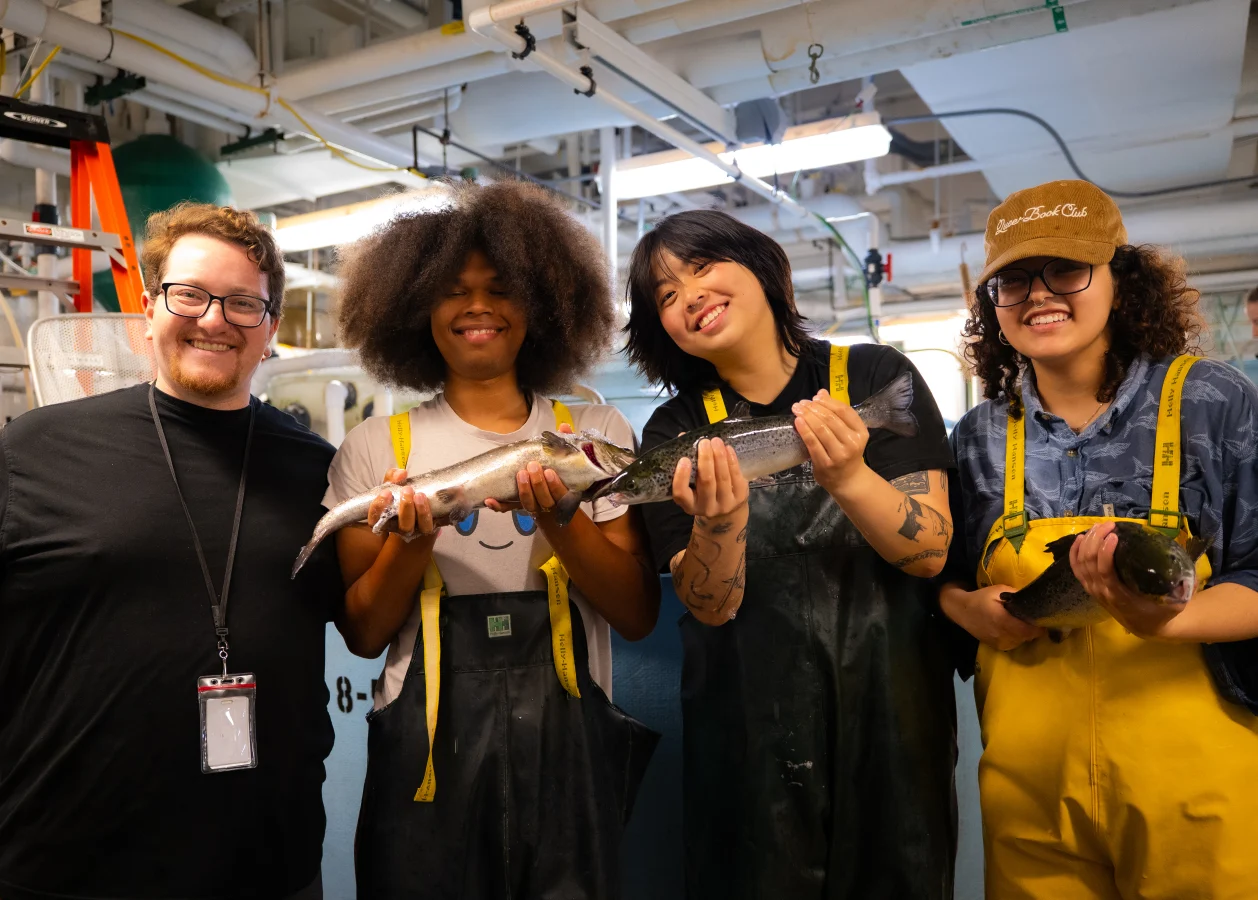
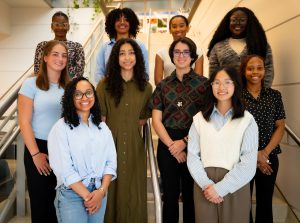
Summer interns in Aquaculture Research Center (ARC) at IMET
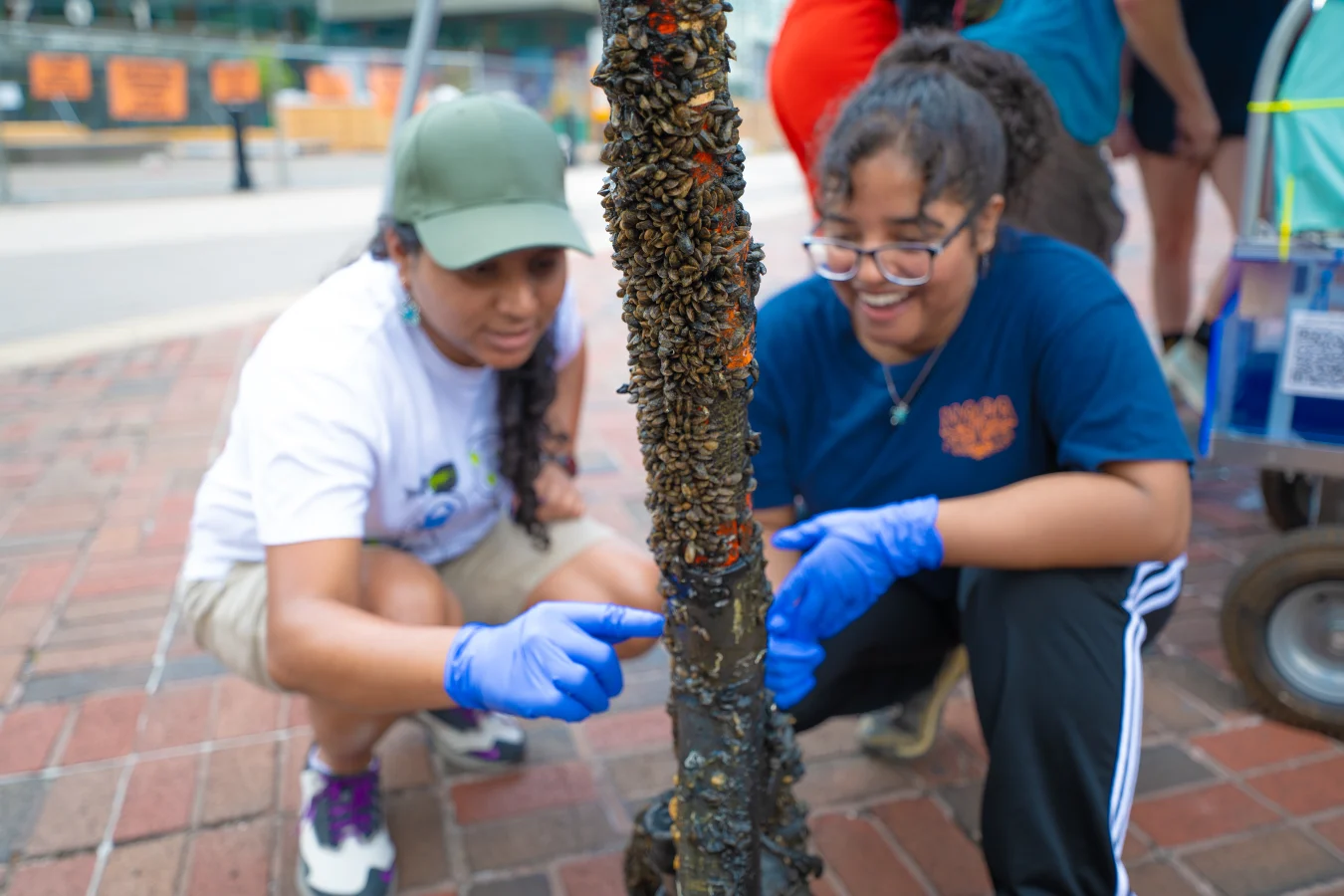
Summer interns at scooter magnet fishing event
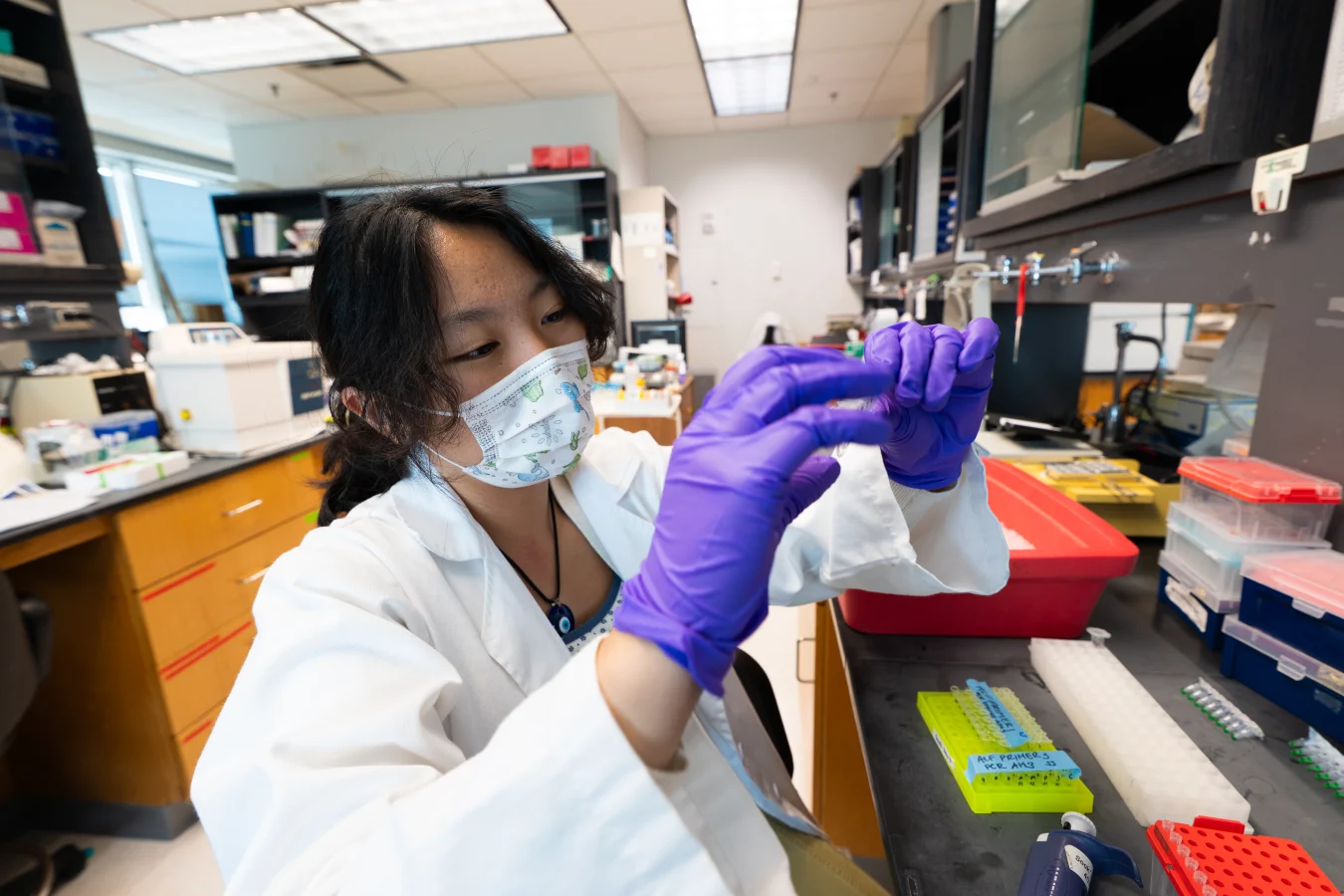
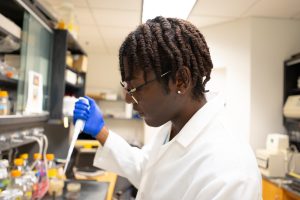
IMET Summer intern in the lab