Scientists caution that stranded ships could cause biofouling super spreader event
As hundreds of stranded vessels sit idle in the Persian/Arabian Gulf and Gulf of Oman, their hulls are rapidly being colonized by marine bacteria, algae, and animals (such as seaweed and barnacles).
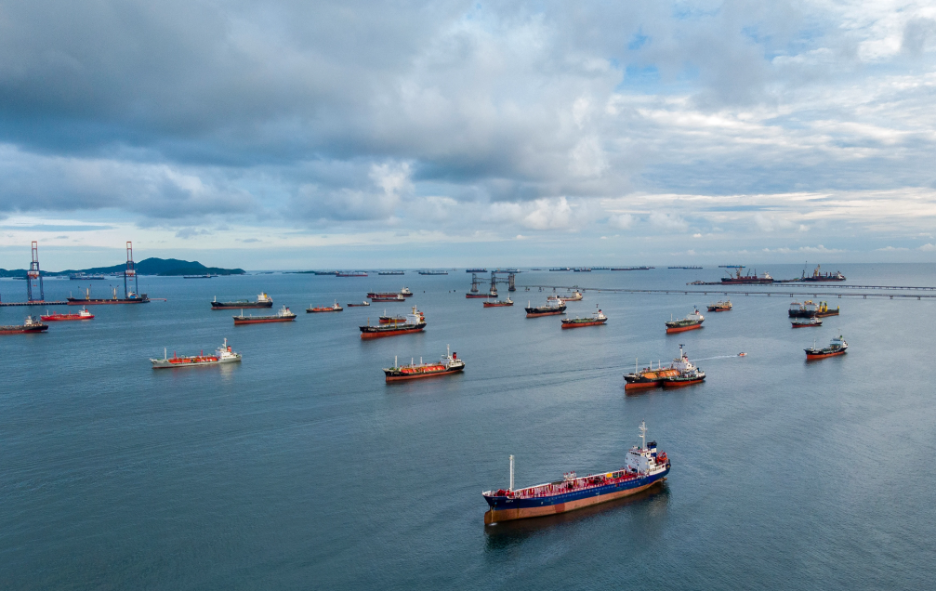
SOLOMONS, MD – An international coalition of 24 marine scientists, led by an expert from the University of Maryland Center for Environmental Science (UMCES), caution that the prolonged closure of the Strait of Hormuz (which began on February 28, 2026) has set the stage for an unprecedented ecological crisis.
Their paper, “Closure of the Strait of Hormuz May Trigger a Bioinvasion Super-Spreader Event,” (opens in a new tab) recently published in the journal Biological Invasions, reveals that as hundreds of stranded vessels sit idle in the Persian/Arabian Gulf and Gulf of Oman, their hulls are rapidly being colonized by marine bacteria, algae, and animals (such as seaweed and barnacles). As these heavily biofouled ships re-enter the global trade network, they will carry invasive species to ports throughout the world, threatening their ecosystems and economies.
“The unprecedented scale and duration of this spring and summer mass lay-up of large commercial ships has created ideal conditions for a marine invasive species ‘super-spreader’ event,” said Dr. Mario Tamburri, a UMCES professor and the study’s lead author. ”Our goal is to raise awareness of this significant biosecurity risk and provide practical recommendations to help reduce non-native species introductions as these idle ships resume their global operations.”
The International Maritime Organization advises that ships idling for more than 30 days require immediate intervention to manage biofouling before sailing — yet these ships have been stranded for nearly four months during the peak marine organism growth and reproduction season.
According to the authors, “in-water-cleaning” of the ships to remove biofouling prior to departure could be highly effective in mitigating their invasion risks. However, given competing priorities and operational constraints, few ships will have the opportunity to safely and effectively remove biofouling before their next port of call. The paper urges ship operators, port authorities, and environmental managers to prepare now for the backlog of ship biofouling management requirements and to implement appropriate actions to abate this “extraordinary biosecurity threat.” Actions may include:
- Estimating vessel biofouling before departure.
- Forecasting vessel routes and first ports of call.
- Implementing early detection and rapid response at high-risk ports.
- Establishing rapid alert and knowledge-dissemination networks.
This grassroots coalition of scientists is advocating for early action and providing solutions to prevent what they call a “bioinvasion super-spreader event.” The team includes leading global experts from UMCES, the Smithsonian Environmental Research Center, King Abdullah University of Science and Technology, and Tel Aviv University.
###
UNIVERSITY OF MARYLAND CENTER FOR ENVIRONMENTAL SCIENCE (UMCES)
The University of Maryland Center for Environmental Science leads the way toward better management of Maryland’s natural resources and the protection and restoration of the Chesapeake Bay. From a network of laboratories located across the state, our scientists provide sound advice to help state and national leaders manage the environment and prepare future scientists to meet the global challenges of the 21st century. To learn more about UMCES, visit www.umces.edu.