A Farewell Conversation with Maryland Sea Grant Director Fredrika Moser
As she prepares to retire, Moser reflects on a career dedicated to science and public service.
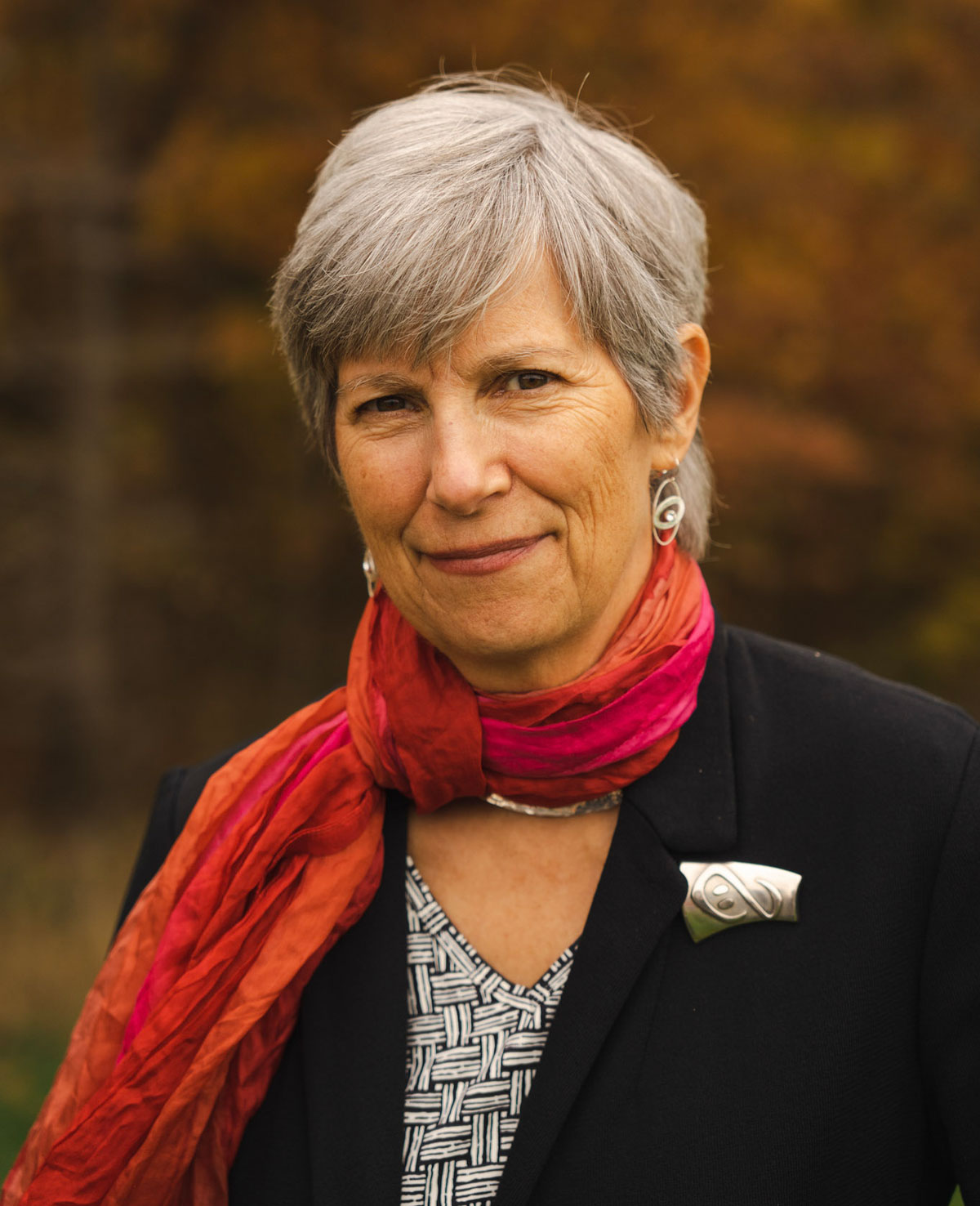
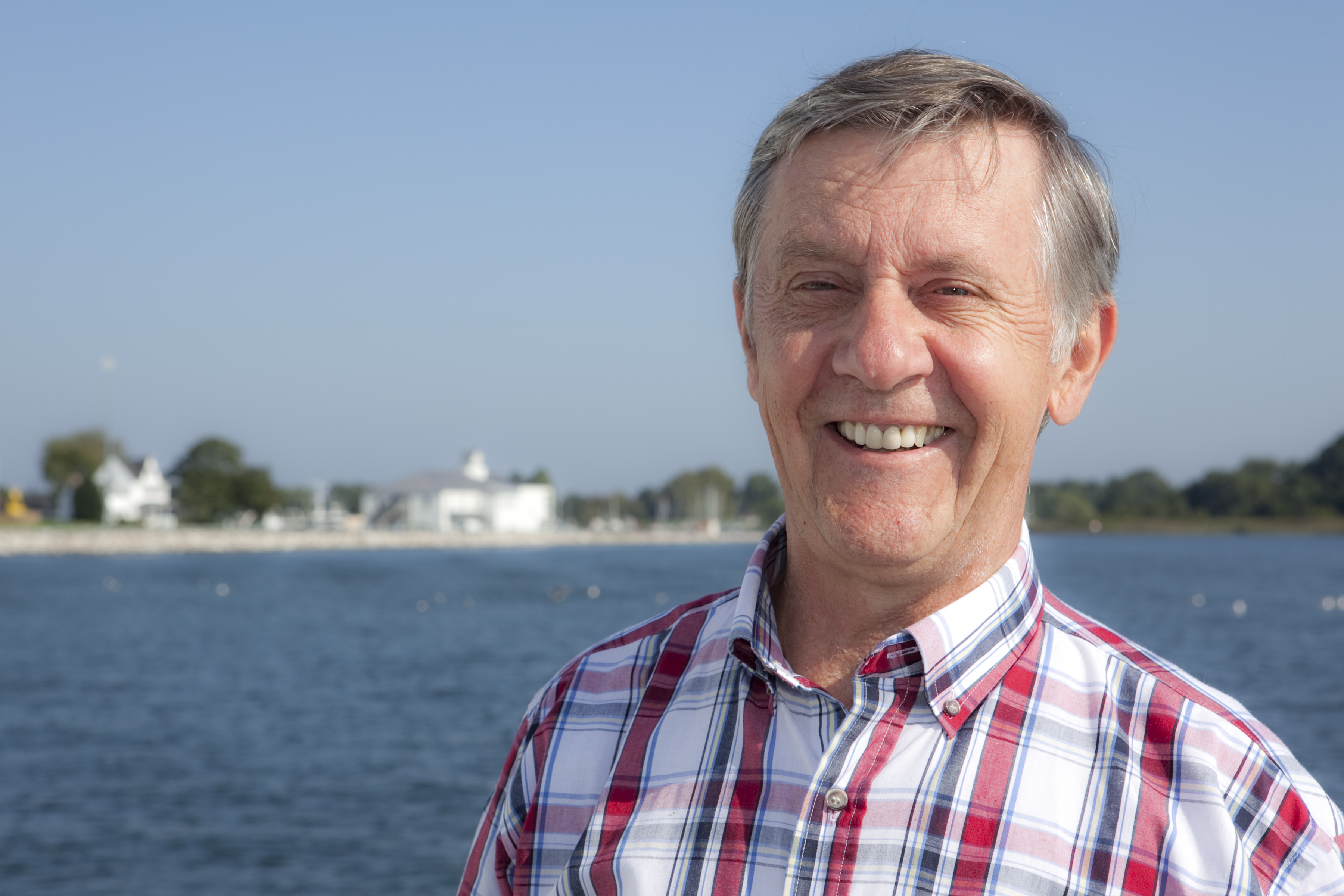
Maryland Sea Grant’s Director Fredrika Moser, PhD, concludes 25 years of service to Maryland Sea Grant and the University of Maryland Center for Environmental Science in July 2026.
Moser served as the organization’s research leader from 2001 through 2011, then assumed the interim director role before being named director in 2012. Under Moser’s direction, Maryland Sea Grant has expanded collaborations and partnerships, funded important research projects, and increased access to education and mentorship in the coastal sciences. Her consistent, proactive leadership has been foundational to Maryland Sea Grant’s success over the past quarter century.
Our communications team spoke with Moser as she reflected on an impactful career dedicated to public service and science-based decision making. This interview has been edited for length and clarity.
You first joined Sea Grant in 2001 as the assistant director for research. What drew you to the organization?
At the time, I was doing a AAAS [American Association for the Advancement of Science] fellowship with the US Department of State. It was an amazing experience to be with a US delegation to international meetings and participate in UN negotiations. But I felt, over time, too far away from my science, and that was really what made me decide to leave the State Department.
I’d been aware of Sea Grant since I was an undergraduate in California. I loved its mission of broad research, science, education, and outreach that always came back to being a science-based program, and that it was located within academia. It provided that freedom you can’t find in a lot of other places to pursue good ideas. It’s a wonderful place to do that. So that was why I was drawn to the position, and I was fortunate to get it.
You mentioned wanting to get back to your science. What was your science?
Basically, it’s coastal geology. But it was a mixture of sedimentology and geochemistry. I had long been interested in environmental issues, really since I wrote a paper about them in the eighth grade. I’d always been attracted to the environment. I liked the ocean.
I worked for 14 years both in education and for New Jersey’s Department of Environmental Protection. And I was really interested in the intersection of society and the environment. Geology and estuaries and contaminated sediments and all of that interaction interested me. And in New Jersey, there was a lot of opportunity to look at contaminants and sediments and social connections to that.
Is there a project or accomplishment you’re especially proud of? Something that had a lasting impact on your career?
It’s hard to say “me” in that, because it’s always been a team. It’s always been thinking about ideas and what people’s needs are. Sea Grant gives you an opportunity to pursue questions and look for solutions that come bubbling up from community and constituent needs. There are lots of projects where we’ve been successful at Maryland Sea Grant doing that kind of work.
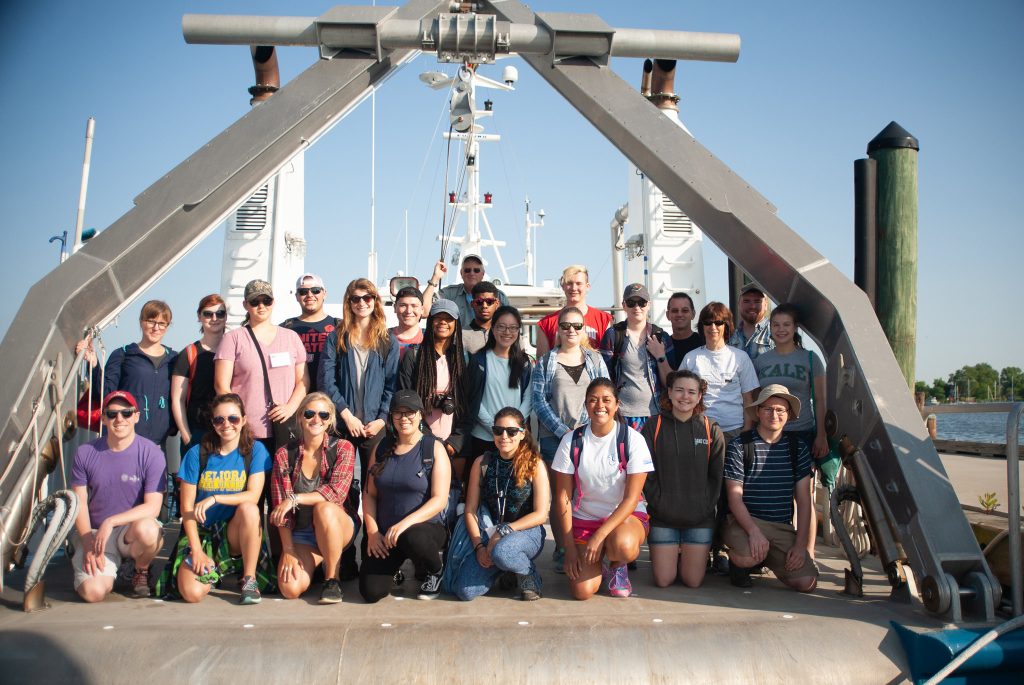
I’m certainly proud of the work the whole program has done to broaden participation in marine science for students who might not have had access in the past. It’s an exciting field, and a lot of people just aren’t aware that it’s a career path. But they care about the environment. They have a connection to nature.
I’ve also enjoyed figuring out how we can help communities in Maryland adapt to the changes that are happening due to climate change and how we integrate that to look at a more holistic approach to design of infrastructure and places to live and to recreate and to work with these changing landscapes. There needs to be a lot of different people at the table to solve these problems in an equitable and intelligent way. It turns out to be very hard work. But I think that’s a really good direction to be going in, and I’m excited to have gotten that rolling along before I left the program.
In your opinion, what makes Sea Grant unique among environmental organizations?
I think Sea Grant has always been helpful in bringing people together, in having conversations that actually lean into adaptive, science-based decision making.
I think we get to do that because we have credibility in academia, and then we come in with a very non-biased, information-seeking attitude. That makes a big difference. And it helps with difficult conversations to be curious, to want to understand the science, to understand what solutions people are looking for, and to translate solutions that are possible in the near term and solutions that are complicated and difficult.
I don’t think we could do it without this interesting relationship we have housed in academia, and yet also with this connection to our congressional support and to various federal agencies.
Are there any projects that stand out as really representative of that type of work?
There are a lot of them. One example of a project that highlights this great combination of different capacities within Sea Grant is helping to frame and support the Chesapeake Bay Landscape Certification Program. It was partly driven by the Total Maximum Daily Load requirements set in the 2000s by the EPA [US Environmental Protection Agency]. Our team asked, how do we put in practices in the ground where we can manage stormwater on people’s properties and small municipalities, so that we can not only clean up the Bay by filtering more water through our groundwater systems, but also address flooding issues.
So what the Chesapeake Bay Landscape Certification did was create a program to help train and certify landscapers in Maryland. And it has now spread to programs in Virginia and Pennsylvania to teach landscapers about these stormwater management practices. It has had great leadership, and early on, Sea Grant was really helpful in facilitating the conversations, providing human capacity to do the work, and writing the first manual. And we’re really excited in the last few years that it expanded into living shorelines and other nature-based solutions design and implementation.
Was there ever a challenging moment in your career that taught you an important lesson?
I think one of the best lessons I learned was when I was helping to staff the US Commission on Ocean Policy. And what I learned from the Department of Defense admirals is, he who holds the pen drives the conversation and sets the policy. I would watch the DOD [Department of Defense] or the US delegation grab the pen first and write down some language. And the core of that language almost never changed. Everybody else edits it, but the principal idea was preserved and owned by whoever wrote that first sentence. If you feel strongly about a direction and a policy, the best thing you can do is offer up a suggestion. Be bold and write the first sentence. That’s a lesson I’ve carried with me.
I have a deep appreciation for being given opportunities to learn about management, how to run an organization, how to care about people, and how to ask the right questions. When I wake up in the morning, I think of two things: Am I serving Maryland’s community effectively, and are the people that work in Maryland Sea Grant as happy as one can be doing work? The real effort is to work as a team to accomplish what we can do within our capacity to support Marylanders. My goal is to support, in whatever way I can, and to lead the organization as mindfully as possible to try to meet some of the goals and objectives of our strategic plan.
Did you have any mentors who helped shape your career?
I had wonderful mentors who were very supportive of my interest in the intersection of science and society, which in the mid-1970s wasn’t a big thing in academia. Fortunately, UC Santa Cruz was very progressive and supportive of that, but there were no combined programs. So, I ended up with a major in earth sciences and a major in environmental studies. But I had wonderfully supportive mentors in both of those programs, and they were also just incredibly kind people.
The only thing I ever knew I really wanted to do was sort of solidified when I was doing my funny double major and finding this environmental niche…I think it was because of this wonderful mentor Bob Allen, who was head of the Kendall Foundation. I got to know him while at Santa Cruz. He was wonderful, and I thought, OK, that’s the job I want. I want to lead something someday.
I [also] had a wonderful mentor, Robert Tucker, when I worked for New Jersey’s Department of Environmental Protection. And then my PhD advisor, J. Frederick Grassle, was just incredible. He really understood what it was I was trying to do.
There have been really wonderful mentors that I’ve had all the way along my path, and certainly at Maryland Sea Grant. Both as assistant director and director, there have been important, cherished people who have been supportive and provided me sound counsel. I think leadership depends on a group of people that you can rely on and trust and who will be honest with you.
How have you approached balancing the needs of researchers, educators, students, and coastal communities?
It’s hard. You want to do everything. I think one of the things we shifted in thinking about, because we’re very careful at Sea Grant, is we’re a service organization. So, if there’s a neat idea and nobody’s doing it, then we need to figure out a way to get that funded. Or we need to talk to other people who we think probably have that capacity. It’s about setting priorities. Everybody’s resource limited. So, don’t start there. Start with, what are you doing already? Does anybody else think this is a good idea? Or so-and-so’s got this neat idea. How, as a team, can we think about whether it’s possible to do this?
How have you seen the relationship between science and public decision making and policy change during your time here?
The biggest change, and it has happened fairly recently, is the shift from the “sage on the stage” to trying to have equal voices in the room in decision making. Instead of thinking you have a cool idea, it’s actionable, and you’re going to do it in a vacuum, the big shift has been bringing in those to whom you want to give a solution, to ask them what they think about it. Is it actually their top priority or even a problem? I hope we don’t lose that value of having other people in the room and their opinions.
Much more broadly, it is the value of heterogeneity in any system. What voices are you hearing, what voices are in the room? Diversity really matters. Ecosystems, decision making, global politics. You need to have different people in the room who have different perspectives and different needs and are articulating those needs. The other lesson there is to try to remind yourself that you cannot read other people’s minds.
What gives you optimism about the future of coastal and environmental research?
I actually am optimistic about the future. I think there are new challenges coming, certainly because of climate change, but I’m so amazed by the youth coming up. The ideas, and the energy, and the amazing emotional intelligence that the generations behind us bring forward. That makes me optimistic that there will be solutions. Just smart, dedicated, caring individuals with hard decisions in the future.
What has kept you motivated throughout your career?
Mostly people and a real interest in the problem. How do we do environmental sustainability and conservation? It’s a hard problem, and it’s just always been a curiosity to me. I like the idea of working within this complex intersection of environment and society. That’s why I love having the lawyers that we have, our fellows. I really enjoy having the thoughtfulness about laws and that intersection with science, which ultimately ends up as policy.
My experience over 40 years of doing this, politics is a very heavy thumb on the scale, so I’m really proud that Congress supports Sea Grant. The law has been around since 1966. Support for Sea Grant is incredibly bipartisan. And I think it’s an indication that at the core of Congress, there really is a deep commitment to the Constitution and to people’s well-being. There’s an understanding that a healthy globe or a healthy planet is what you need for happiness.
What advice would you give someone who’s just starting a career in marine or environmental science?
You have to follow your heart, but don’t disregard your needs for housing and food security, because you’re going to have to balance that if you’re really going to enjoy it. You’re going to do it for a long time, so you better hope when you wake up Monday morning that you want to go to your job.
Be optimistic. Fundamentally, if you’re following your heart with your job and you’re living in a way that is comfortable for you, then I hope you will have a happy and successful life.
What are you most looking forward to in retirement?
After I sleep for a month? Travel. There’s the go-go years, the slow-go years, and the no-go years. I hope those go-go years are going to last. I also think about my carbon footprint, so I’ll be conscious about that. I certainly want to work for free and fair elections this year. I have a passion for art history and art, and I’m so lucky to live in the Washington, DC, area. So, I will go to a lot more museums, and I will go listen to nerdy talks by art historians. And I’ve always been committed to and supported women’s rights, so I’ll probably do more in that. I’ve already been elected as president of my town’s conservation trust. I will probably work in my town to try and provide better education and information about native plant gardens.
My husband, Rick, and daughter, Lucy, have been amazingly patient and understanding about my job. I benefited so much from their input and thoughtfulness about people and the environment. My daughter is getting married this September and I look forward having more time to enjoy new adventures with Rick.
What’s something about Maryland Sea Grant that you hope persists after you leave?
I’m excited about the younger team at Sea Grant and their energy, enthusiasm, and deep commitment to a healthy and sustainable planet. I feel my generation perhaps created more of a mess than we meant to. I’m excited to make space for new ideas and new leaders.
I’m also very excited to be leaving Maryland Sea Grant in the extraordinarily capable leadership of Mike Allen, PhD, who is coming in as interim director.