

Critter of the Month
PhytoChop Observatory Home (opens in a new tab)
The Critter of the Month pairs an original watercolor from Julie Trommatter of Good Juju Designs with a brief essay. It’s a new initiative from the Horn Point Lab (UMCES) in collaboration with the PhytoChop Coastal Observatory, a premier platform for testing phytoplankton monitoring tools and advancing molecular ecology.

The ongoing research activities at PhytoChop are made possible through the generous support of The Bailey Wildlife Foundation. More information can be found at https://www.umces.edu/
Do you have a favorite Chesapeake Bay creature, big or small, that you’d like to see featured in future editions? We’d love to hear from you. Contact Claire at cotterbein@umces.edu.
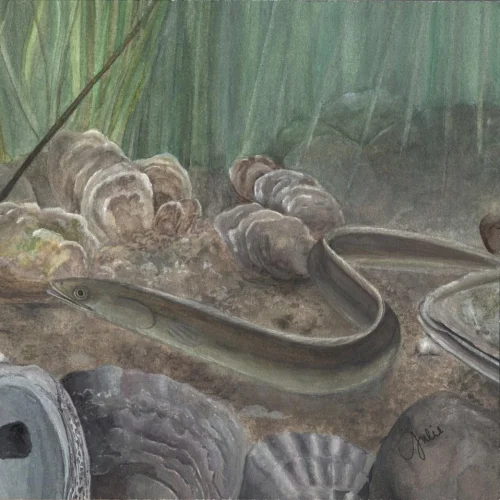
American Eels
Our Critter of the Month for August is the slippery and enigmatic American Eel.

River Otter
Our Critter of the Month for July is the River Otter. If you know just three things about river otters in the Chesapeake Bay area, you probably know this: they’re playful, they visit the washroom together, and they’re making a comeback in some formerly polluted places around the Bay.

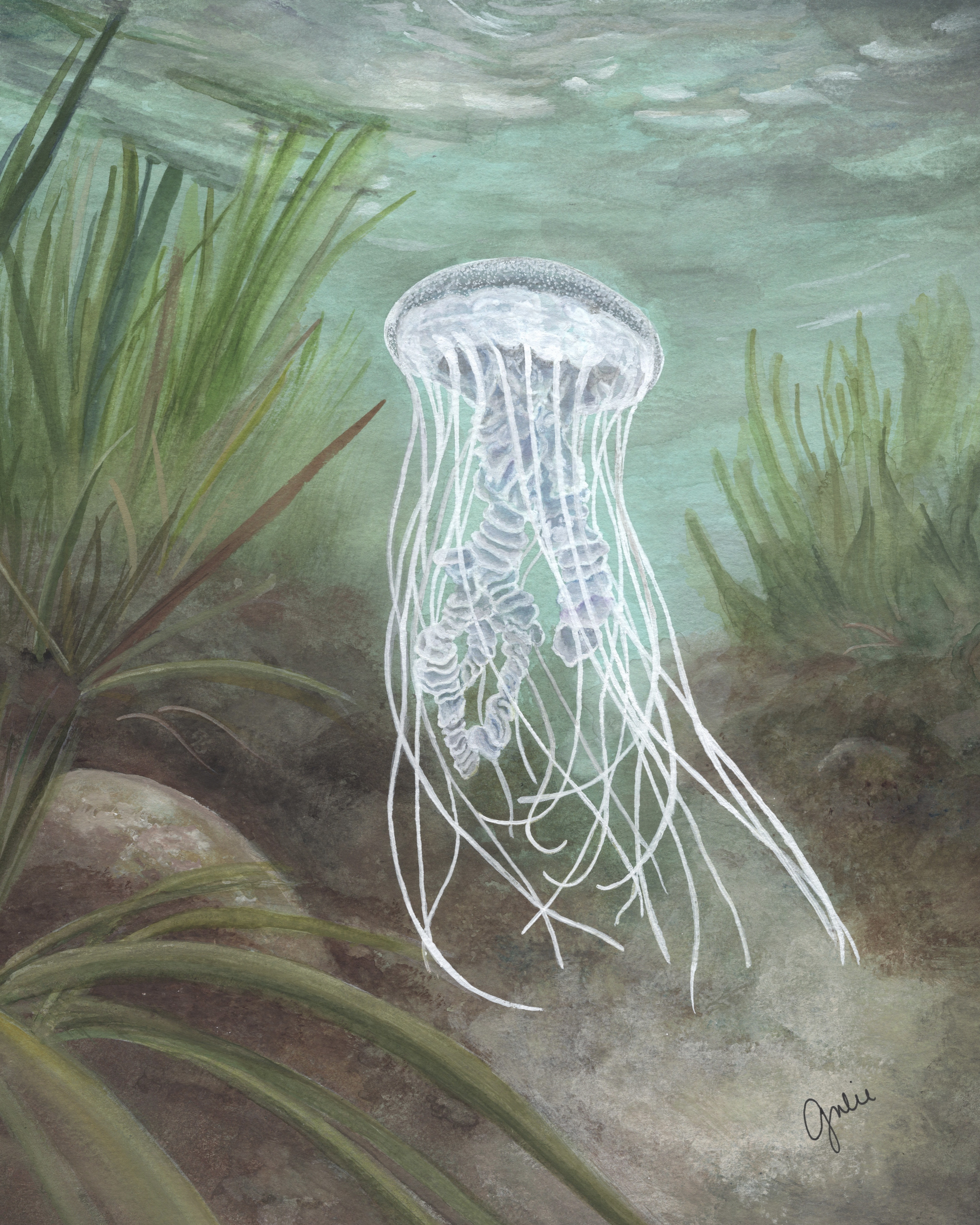
Atlantic Bay Nettle
Our Critter of the Month for June is a creature that hardly needs introduction, the Bay Nettle, Chrysaora chesapeakei. Love it or loathe it, this stinging jellyfish is an enduring part of the Bay’s summer ecosystem.

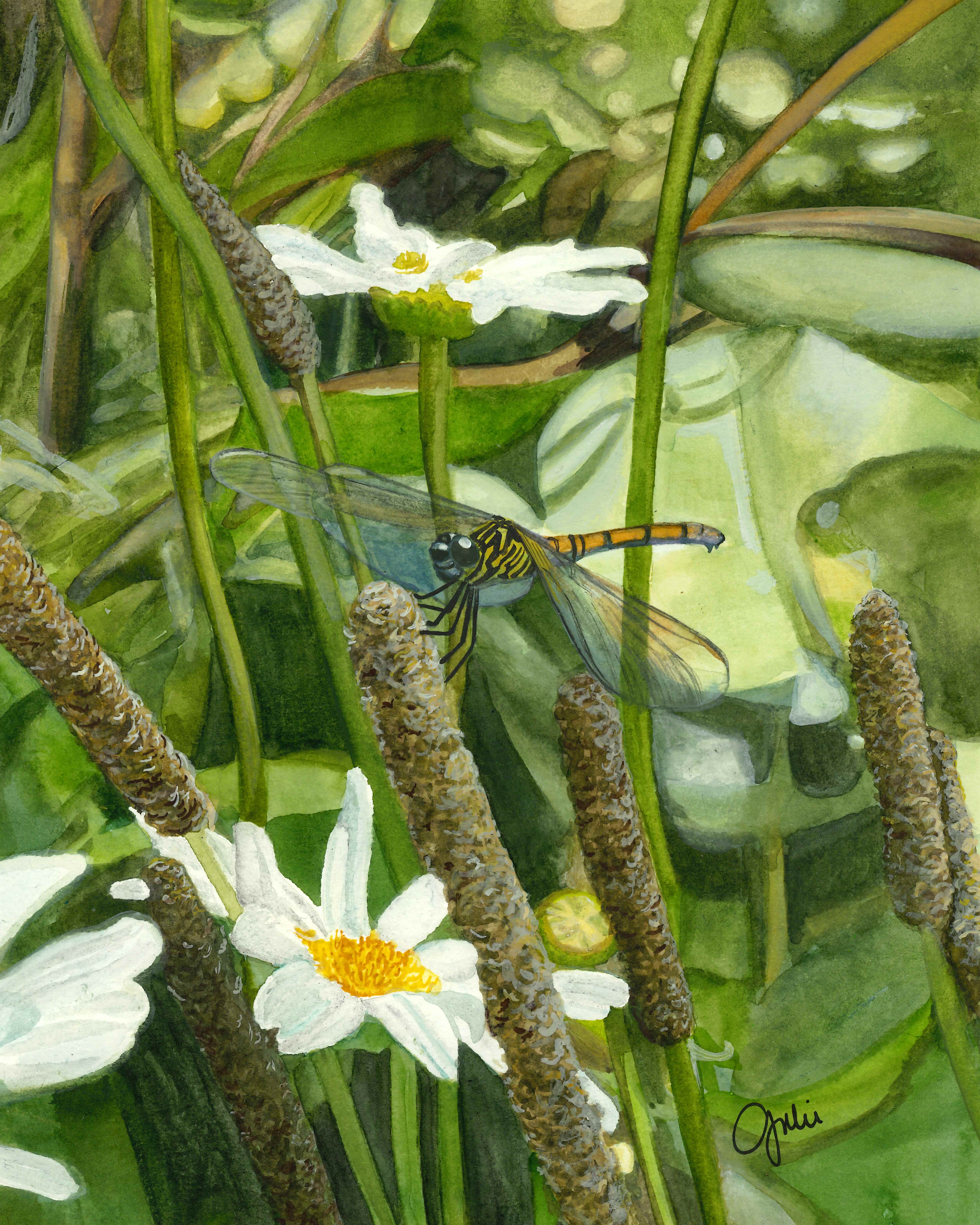
Seaside Dragonlet
Our Critter of the Month for May is the Seaside Dragonlet, Erythrodiplax berenice, a small dragonfly distinguished by its habitat preference for salt marshes.

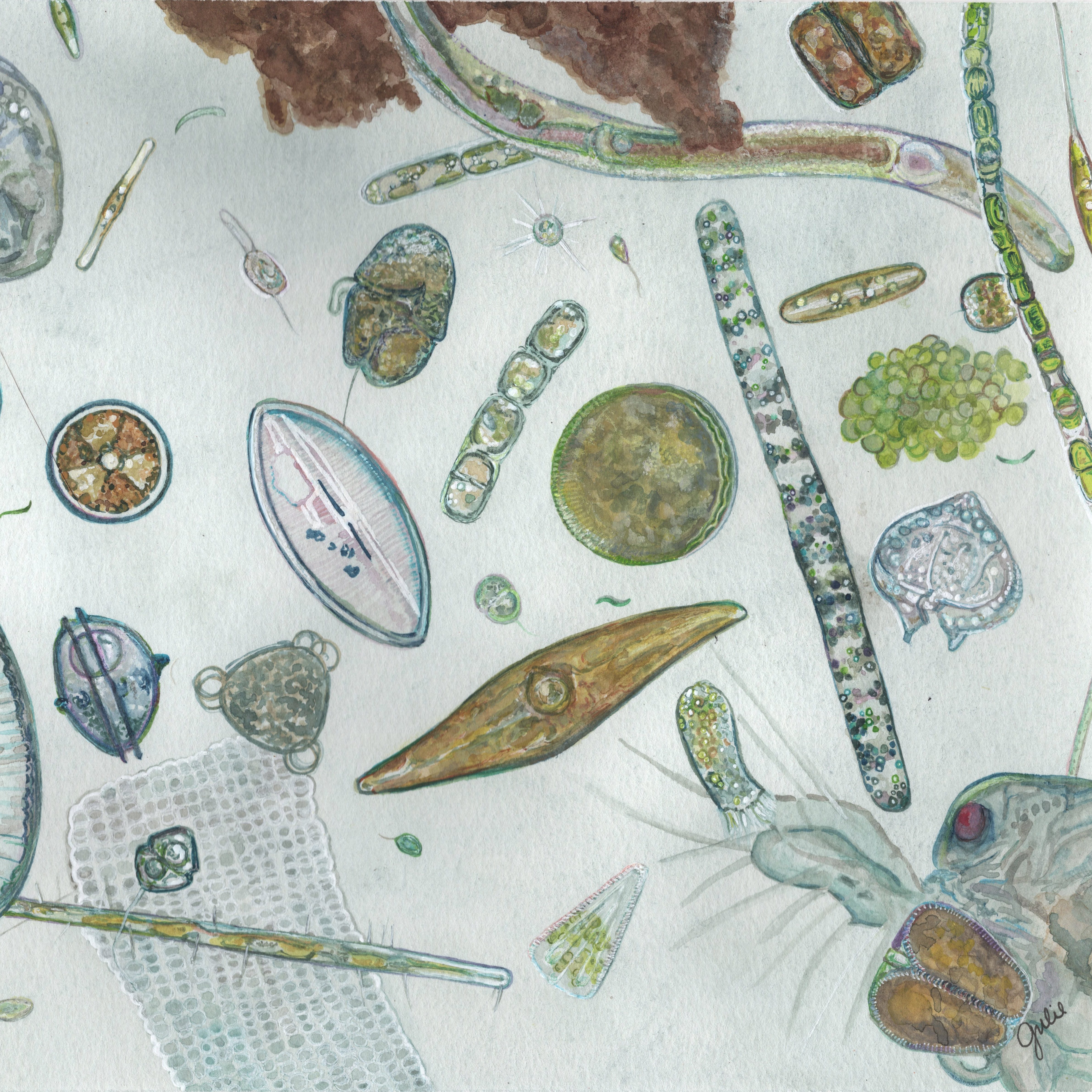
Spring in Bloom
Our Critter of the Month for April is a spring bloom of plankton from the Choptank River, Chesapeake Bay. This image is based on plankton samples that Julie Trommatter and colleagues have been collecting at the PhytoChop Observatory and then imaging by microscopy. Julie assembled several of these images into a digital collage as a blueprint for this watercolor. How many organisms can you identify?

Bottlenose Dolphin
Our Critter of the Month for March is the Bottlenose Dolphin, Tursiops truncatus, a charismatic summer resident of the Chesapeake Bay.

Mummichog Killifish
Our Critter of the Month for February is the Mummichog killifish, Fundulus heteroclitus. This salt marsh resident is an exceptionally adaptable and hardy little fish and one of the most abundant minnow-sized fish in the Chesapeake Bay.

White Fingered Mud Crab
Our Critter of the Month for January is the White-Fingered Mud Crab, Rhithropanopeus harrisii (Gould, 1841). This diminutive and adaptable resident of oyster reefs and woody debris and is one of the most abundant crabs in the Chesapeake Bay.

Double-Crested Cormorant
Our Critter of the Month for December is the Double-Crested Cormorant. A large black waterbird with a distinctive silhouette, the double-crested cormorant is often seen perched with wings half-spread to dry in the sun and wind. This behavior results from their unique adaptation for underwater hunting. Unlike most waterbirds, cormorants lack waterproof feathers, a trade-off that allows them to dive deeply and pursue fish with remarkable agility, but requires them to dry their wings before they can fly again.

Coscinodiscus
Our Critter of the Month for November is Coscinodiscus, a jumbo example of a planktonic diatom. Diatoms have distinctive glass shells that exhibit intricate honeycomb-like patterns when viewed under the microscope. Diatoms formed the diatomaceous earth foundation beneath Calvert Cliffs, and today’s diatoms continue producing oxygen in the waters of the Chesapeake Bay.

Ghost Anemone
Our Critter of the Month for October is the Ghost Anemone (Diadumene leucolena), a small sea anemone whose translucent body and tentacles inspired its haunting name. One of only a few anemone species native to the Chesapeake Bay, this tiny predator uses harpoon-like stinging cells to capture prey drifting past its crown of tentacles. Unlike its close relative, the Orange-Striped Green Anemone, which has invaded coastlines worldwide and experiences dramatic boom-and-bust cycles, the Ghost Anemone maintains a more limited range but with stable, genetically diverse populations.

Marsh Periwinkle
Our Critter of the Month for September is the marsh periwinkle (Littoraria irrorata), a small gastropod mollusk whose scientific name translates to “dewy shore-dweller.” Commonly seen clinging to the cordgrass that dominates in salt marshes along the Atlantic and Gulf coasts of North America, this remarkable snail is far more than a simple grazer. The marsh periwinkle actively cultivates its preferred food, fungus, making it one of the few known fungal farmers outside the insect world.

Eastern Box Turtle
Our Critter of the Month for August is the Eastern Box Turtle (Terrapene carolina carolina), a slow-moving, long-lived and, frankly adorable reptile that reminds us that to enjoy the dog days of summer, we may need to slow down and rest, and embrace a brief moment of restorative summer dormancy before gearing up again for the energizing cooler fall weather. These reptiles have mastered the art of living long, though they need our help to prosper in a world of increasingly fragmented forests.
July 2025 – Gammarus
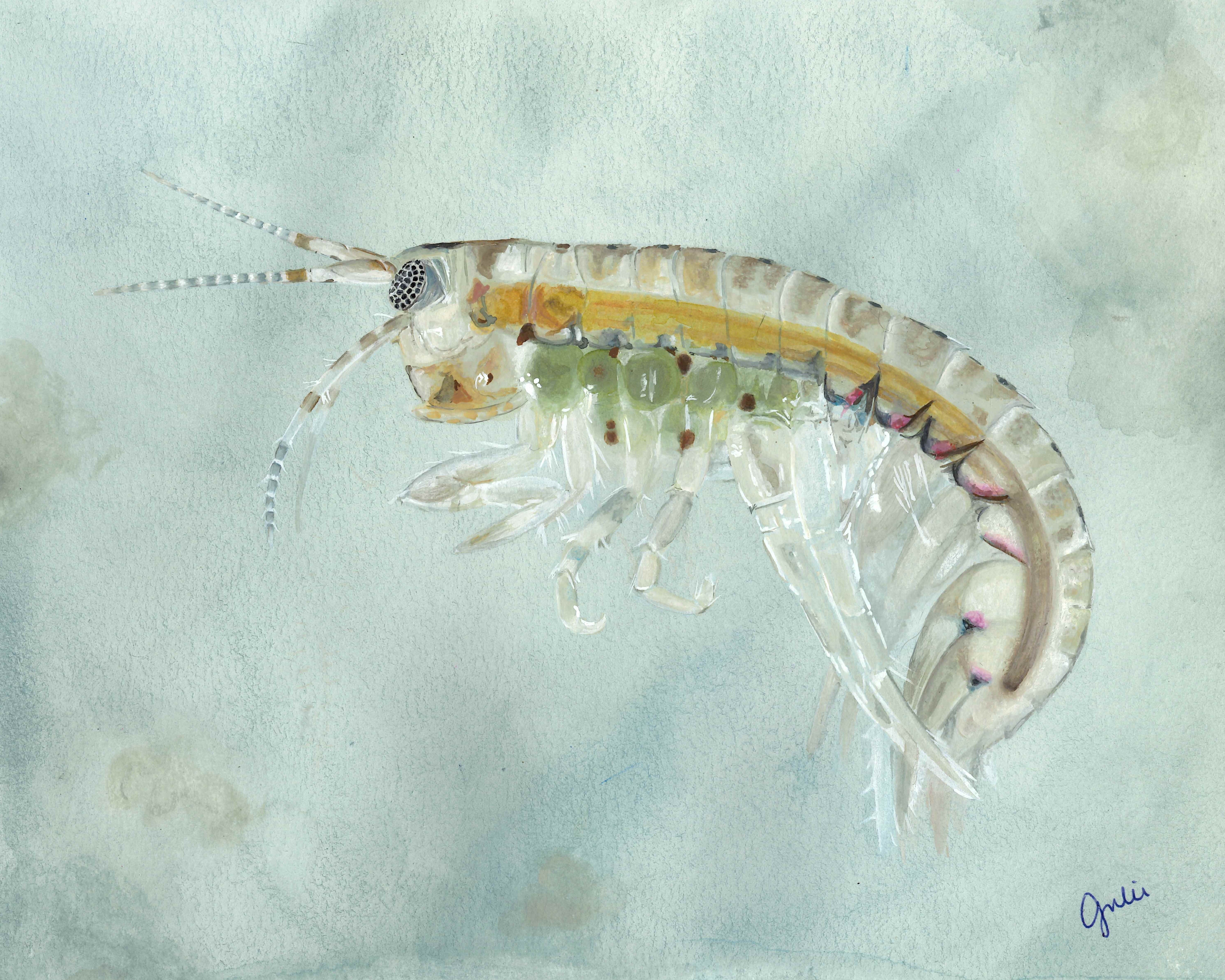
Our Critter of the Month for July is Gammarus, a genus of small crustaceans belonging to the order Amphipoda. Amphipods, which also go by the names sideswimmers or scuds, and include familiar critters like sand fleas and are distantly related to crabs and shrimp. They tend to live on or just above the seafloor, where they serve as important consumers of detritus and a food source for small fish.
June 2025 – Horseshoe Crab
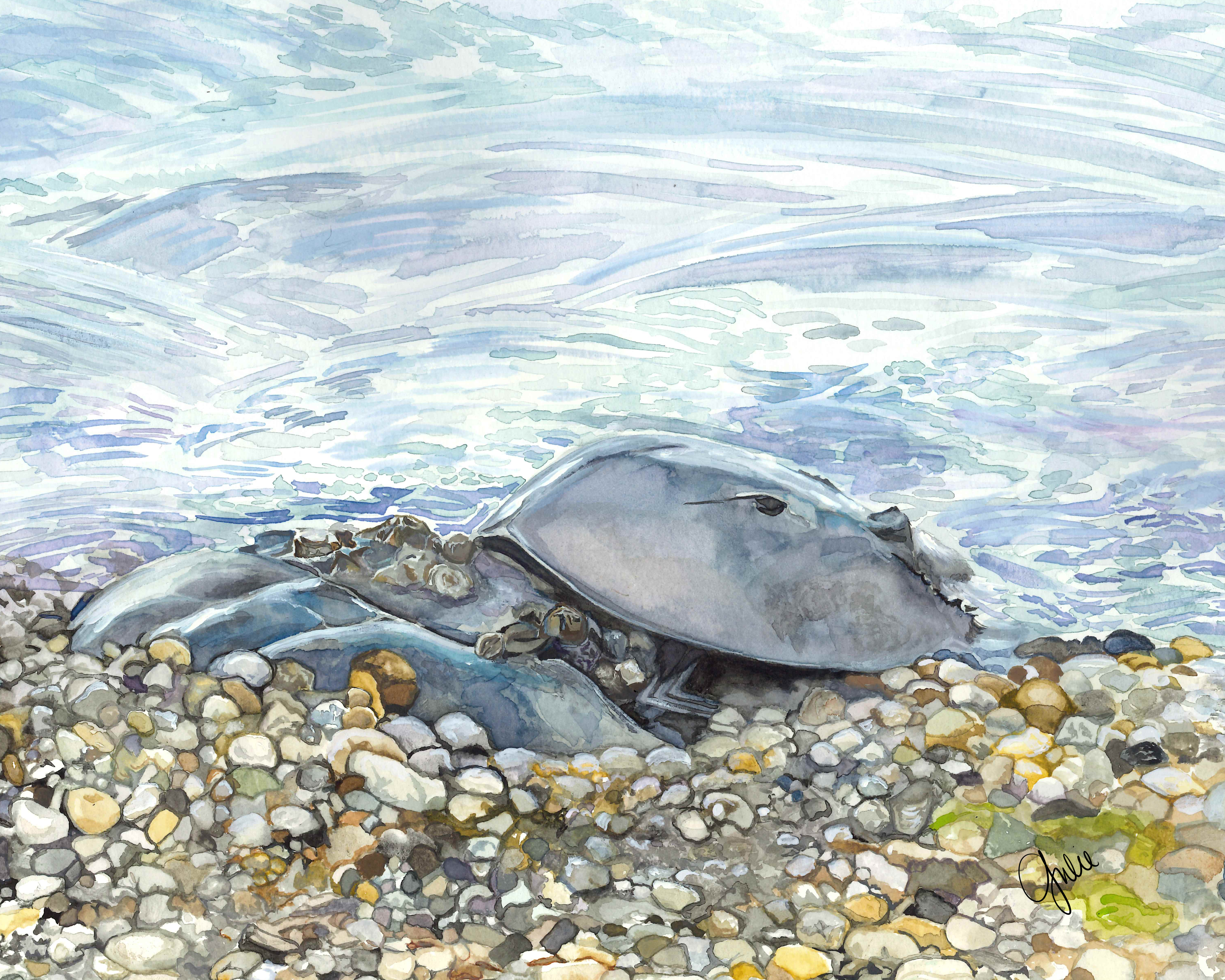
Our Critter of the Month for June is the delightfully misnamed Atlantic Horseshoe Crab (Limulus polyphemus), which is not a true crab at all, but a closer relative to spiders and scorpions. These armored arthropods, whose lineage predates dinosaurs, possess blue blood valued in modern medicine and serve a crucial ecological role supporting migratory birds along the Atlantic flyway.
A brief essay can be found here.
May 2025 – Dinophysis
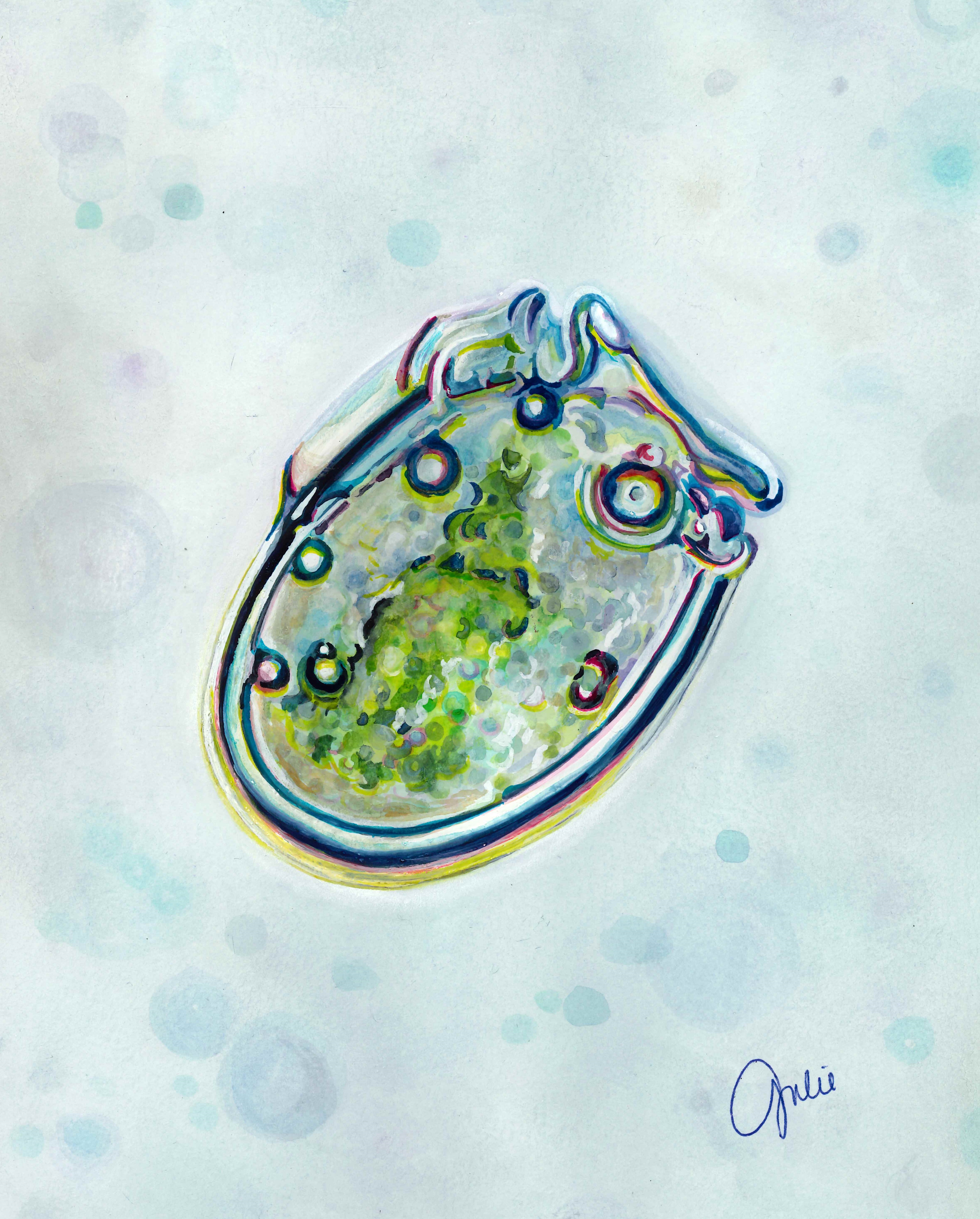
Our Critter of the Month for May is Dinophysis, a single-celled marine creature that makes its living stealing chloroplasts from its prey in a complex three-level theft chain. While most species of this dinoflagellate genus are harmless contributors to Chesapeake Bay food webs, some can produce toxins that accumulate in shellfish, requiring careful monitoring to protect both marine life and human health.
A brief essay can be found here.
April 2025 – Osprey
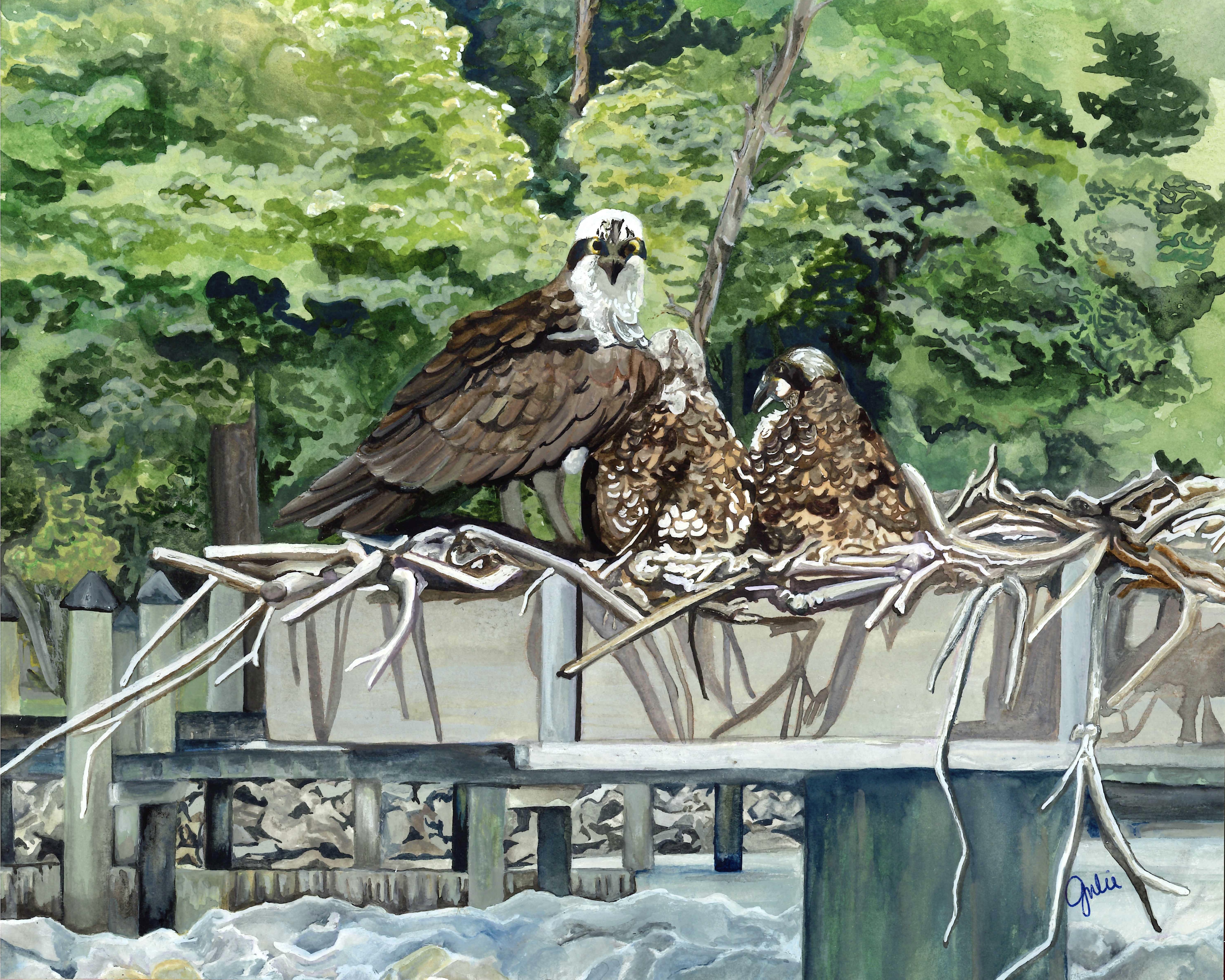
Our Critter of the Month for April is the Osprey (Pandion haliaetus). Did you know the Chesapeake Bay hosts the world’s largest concentration of these fish-eating specialists? With a body built for capturing slippery prey and a remarkable ability to transform navigational structures and platforms into suitable homes for their oversized stick nests, it’s no wonder that an estimated 30% of the world’s Ospreys make the Chesapeake their home.
A brief essay can be found here.
March 2025 – Striped Blenny
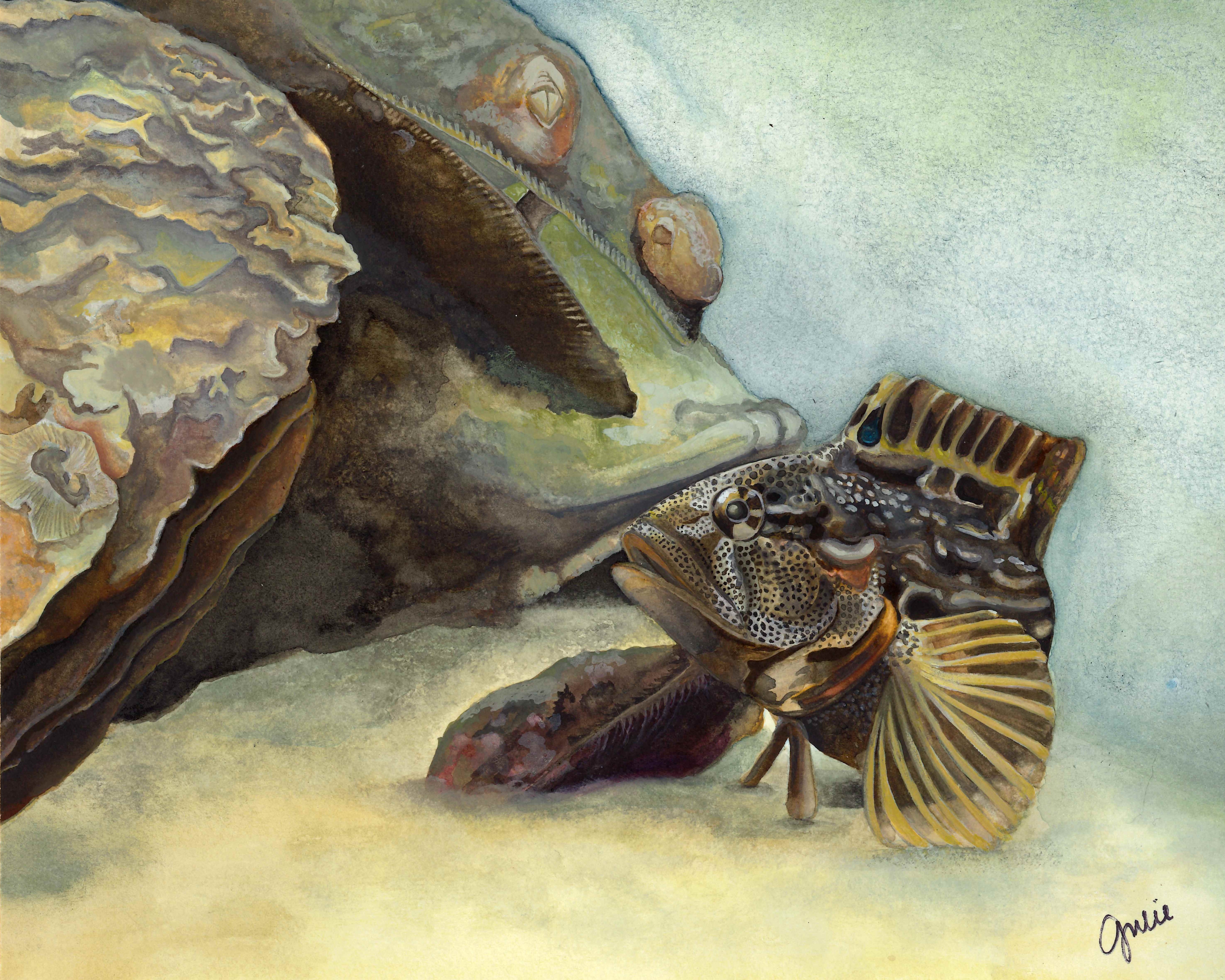
Our Critter of the Month is the Striped Blenny, a small but tenacious year-round resident of the oyster reef. Pictured here in his breeding colors, this determined fish fiercely defends his small territory among oyster shells. As waters warm and days lengthen, he will soon be defending eggs deposited in his chosen oyster shell home.
A brief essay about the Striped Blenny can be found here.